This is an early analysis article, first published via the Plane Range newsletter. Subscribe to get new analysis like this before it appears on the site.
Buy a car and you can reasonably expect to fill every seat, load the trunk, and top off the tank all at once. Commercial aircraft do not work that way.
Every airliner has a hard legal ceiling on how heavy it may be when the wheels leave the runway. That number is the Maximum Takeoff Weight, or MTOW, and it is not advisory. It is backed by years of structural testing, certified by regulators, and written into the aircraft's operating manual. Exceed it by a pound and the flight does not go.
The consequence is something passengers rarely think about: airlines often cannot do all three things at once. A full cabin, a full cargo hold, and full fuel tanks do not fit inside the same weight budget. Something has to give, and it is almost always fuel. The aircraft departs with less than its tanks can hold, its range shrinks, and routes that look viable on paper get quietly written off in practice.
In March 2026 the FAA approved an Increased Maximum Takeoff Weight (iMTOW) for the Boeing 787-9 and 787-10. Boeing redesigned nothing. No larger fuel tanks, no new wings, no more powerful engines. Boeing proved through testing and certification work that the existing airframes could safely carry more weight than they had originally been certified for. A software update, reinforced landing gear on new-build aircraft, and a great deal of regulatory paperwork unlocked up to 430 nautical miles of range that was always physically present and merely illegal to use.
Why this matters more for some variants than others takes some explaining, because the iMTOW is really a story about a stretched aircraft that had been capping its own range for a decade.
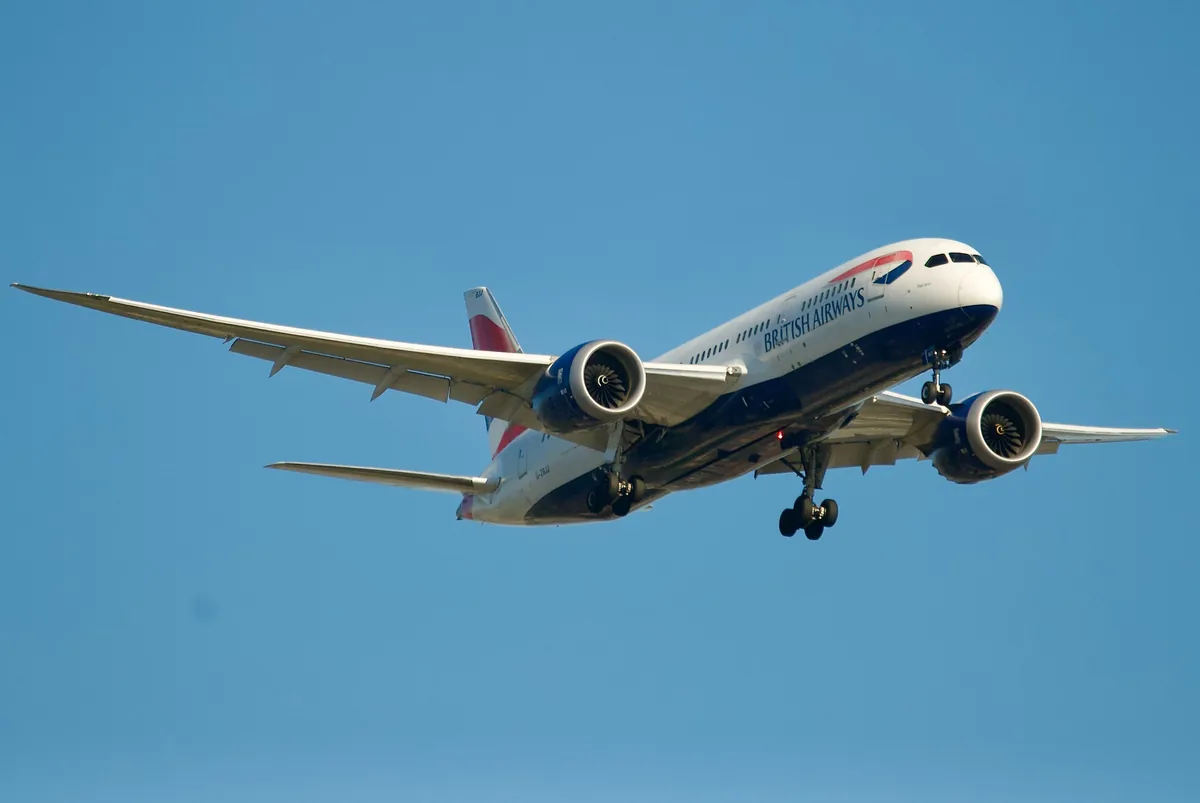
The headline data first:
| Variant | Legacy MTOW | New iMTOW | Delta | Payload Gain | Range Gain |
|---|---|---|---|---|---|
| 787-9 | 561,500 lbs (254.7 t) | 571,500 lbs (259.2 t) | +10,000 lbs | ~3.0 t | +300–310 nm |
| 787-10 | 560,000 lbs (254.0 t) | 574,000 lbs (260.3 t) | +14,000 lbs | ~5.0 t | +400–430 nm |
The Boeing 787-8, the original and shortest Dreamliner, is absent from that table. It received no iMTOW at all, and the reason says a good deal about Boeing's current priorities.
In the mid-2000s Airbus was betting on the A380 and a hub-and-spoke future: enormous aircraft linking major hubs, smaller aircraft fanning out from them. Boeing read the same market data and reached the opposite conclusion. Passengers would prefer nonstop point-to-point flying, and what the market wanted was not a bigger aircraft but a more efficient one, capable of making thin long-haul routes profitable.
That aircraft became the 787 Dreamliner. To hit its efficiency and range targets Boeing made a radical structural choice: build the airframe primarily from carbon fiber reinforced plastic rather than aluminum. The 787 was the first airliner where composites accounted for more than half the airframe by weight.
The program nearly broke the company. Boeing outsourced production across a global supplier network to speed development and share risk, and the strategy backfired. Components arrived that did not fit together. Software ran years late. The composite fuselage sections developed problems that took years to diagnose. An aircraft meant to enter service in 2008 flew its first commercial flight in October 2011, with an estimated $32 billion in cost overruns.
One detail from that period matters here. The 787-8 came out heavier than Boeing had promised. Early production aircraft carried more structural weight than the design specification allowed, and the fuel burn and range figures Boeing had sold to airlines proved out of reach on the delivered aircraft.
Boeing resolved most of this in later production and introduced two stretches: the 787-9, which entered service with Air New Zealand in 2014, and the 787-10, launched in 2018. Both inherited years of accumulated manufacturing improvement. They were structurally more efficient, hit their weight targets, and became the variants airlines actually ordered.
They also inherited a quirk. When the 787-9 and 787-10 were certified, Boeing set both MTOW limits at roughly the same figure, around 560,000 lbs. The 787-9 had structural margin to spare at that weight. The 787-10, physically larger and heavier, did not.
The 787-10's Operating Empty Weight, meaning the aircraft with no passengers, cargo or fuel aboard, sits around 290,000 lbs. Everything loaded on top of that number, including passengers, bags, cargo, catering and jet fuel, has to fit in the gap between OEW and MTOW.
Under the old 560,000-lb limit that gap was 270,000 lbs. Now fill the aircraft. A 787-10 in typical airline configuration seats around 330 passengers, and at the 200 lbs per passenger that regulators use for planning, bodies and bags account for 66,000 lbs. A full 787-10 belly holds roughly 30,000 lbs of freight. That is 96,000 lbs of payload, leaving 174,000 lbs for fuel.
The 787-10's tanks hold around 223,000 lbs. At a full load of passengers and cargo the aircraft physically could not fill them, and left roughly 49,000 lbs of tank capacity unusable.
That is not a rounding error. It is a large fraction of the aircraft's usable range, unavailable for reasons that had nothing to do with the aircraft's capability. The tanks had the volume, the engines had the thrust, and the certified weight limit said no.
The iMTOW adds 14,000 lbs. Against a 560,000-lb baseline that is a 2.5% increase, which sounds modest until you account for the compounding in fuel planning: extra fuel lets you carry extra fuel further. The 400 to 430 nm figure is the result of that compounding, and it is enough to move whole categories of route from marginal to routine.
Adding weight to an aircraft to increase its range sounds backwards. The resolution is in what kind of weight.
Passengers make an aircraft heavier and reduce its range, because you burn extra fuel carrying people who contribute nothing to flying. Fuel is different. Fuel is the energy source, and the aircraft burns fuel to carry fuel along a well-understood optimization curve.
The Breguet Range Equation, the fundamental formula of aircraft range, holds that range is proportional to the logarithm of the ratio between takeoff weight and landing weight. In plain terms: the more fuel you start with relative to your empty landing weight, the further you fly. There is a diminishing return, since lifting fuel costs fuel, but across the weights commercial aircraft actually operate at, more fuel reliably means more distance.
The iMTOW raises the legal ceiling on takeoff weight, so an airline can fill the tanks closer to capacity. The aircraft departs heavier, burns more in the first hours, and reaches a destination that was previously out of range because it simply carried more stored energy off the runway.
Boeing did not redesign either aircraft. The 787-9s and 787-10s already in service with United, British Airways, Singapore Airlines and dozens of other carriers are not being modified. The iMTOW applies to new production aircraft leaving the line in Everett, Washington and Charleston, South Carolina.
The physical change on those aircraft is mostly the landing gear. A 787-10 touching down at the new maximum weight hits harder, so Boeing reworked the structural analysis, tested the gear to the higher load limits, made targeted reinforcements, and demonstrated airworthiness to the FAA. Flight control software was updated for the handling characteristics at higher takeoff weights.
Everything else, including the wings, fuselage, engines and systems, was already strong enough. This is ordinary in commercial aviation. Certification requires structural margins well above what an aircraft meets in normal service, partly so upgrades like this remain possible later. Boeing designed the 787 expecting that headroom to exist. The iMTOW is the first time it has formally been spent.
For airlines ordering now, new deliveries arrive iMTOW-capable. For airlines with existing fleets, including United, which operates the world's largest 787-10 fleet, the picture is messier. Those frames are not being retrofitted and will not qualify for the higher limit. Expect a two-tier 787-10 fleet to emerge over the coming decade: legacy aircraft held to the old weight, newer deliveries flying the expanded envelope.
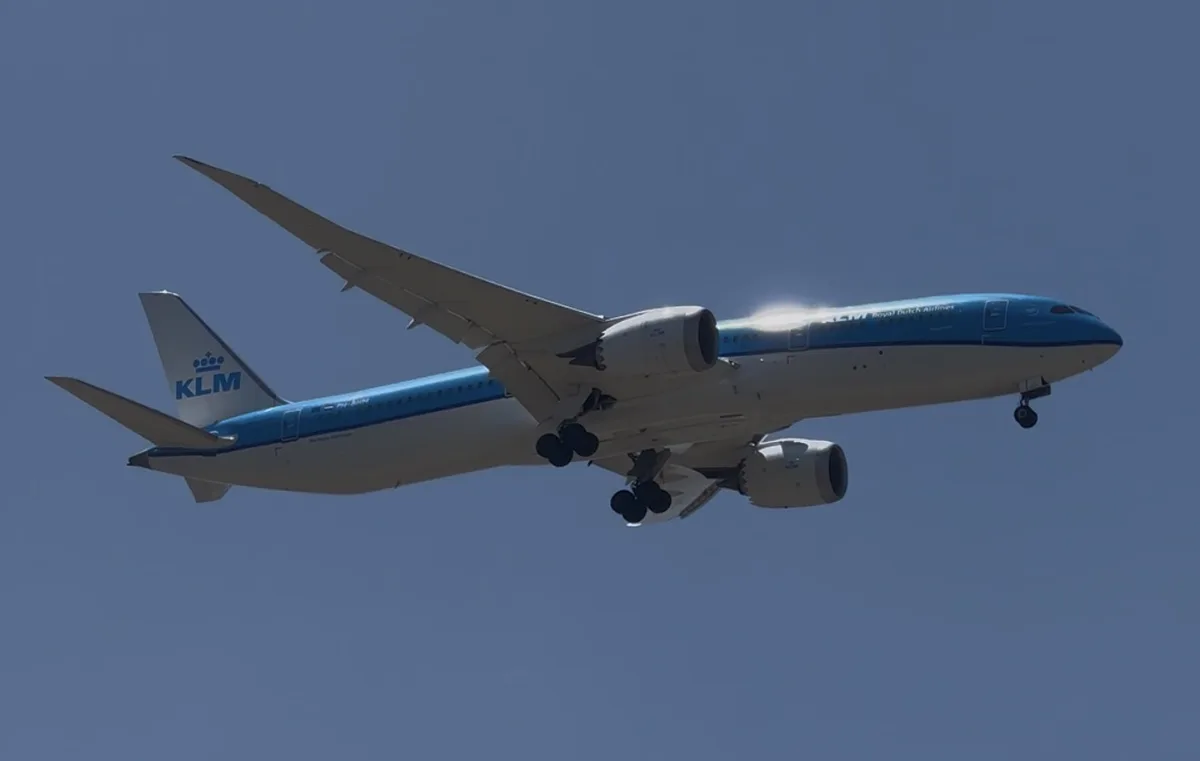
Range figures in the abstract are hard to reason about, so here are the specific operational problems the iMTOW solves.
United Airlines, Chicago (ORD) to Tokyo Narita (NRT). The great circle distance is 5,440 nm, comfortably inside a 787-10's book range. Winter is the problem. Pacific jet streams add hundreds of miles of effective distance to westbound transpacific flying, and the figure that matters to a dispatcher is not the great circle but the air distance actually flown. United has historically managed this by capping bookings, limiting cargo, or accepting a fuel stop. An extra 400 nm of margin covers the seasonal penalty without giving up commercial payload.
Qantas, Sydney (SYD) to Johannesburg (JNB). At 5,952 nm this is one of the longest routes Qantas flies with a 787-9, and it runs under payload restrictions today. The 787-9's 300 nm gain is aimed squarely at cases like this, where the aircraft can reach the destination but not with everything the airline would like to put in it.
The 6,300 to 6,700 nm band. This is where the 787-10 gains most, because a cluster of real routes sits just past where the aircraft could previously operate at full load. Delhi to Newark is 6,352 nm. Nairobi to New York JFK is 6,391 nm. Delhi to Chicago is 6,491 nm. Addis Ababa to Chicago is 6,577 nm. Mumbai to Boston is 6,610 nm. Each of these is the kind of route where a widebody with 330 seats and a full belly makes sense and where, before the iMTOW, the 787-10 would have been shaving payload to make the numbers work.
The largest effect is not new routes appearing on departure boards. It is existing routes becoming reliably operable at full commercial load. The 787-10's case to airlines has always rested on cost per seat, the lowest of any widebody in production, and those economics only materialize when the aircraft is full. A 787-10 flying at 85% load because the airline is managing a weight limit is not delivering the economics that justified buying it. The iMTOW lets airlines run the aircraft the way the business case always assumed.
The Boeing 787-8 received no MTOW increase, no range gain, and no certification update. The reason traces back to the early production weight problem.
The 787-8 was built to a structural specification reflecting an immature composite manufacturing process. Its fuselage frames, wing-body join and major assemblies were engineered with the conservative margins of a program learning a new material in production under commercial pressure. The result was an aircraft that is structurally sound but not structurally optimized, and there is not enough margin in the airframe to support a meaningful weight increase without modifying primary structure.
Boeing has shown through its actions that it has no interest in funding those modifications. The last 787-8 was delivered in 2020, no new orders have been taken since the pandemic, and the line has been reconfigured for the 787-9 and 787-10 exclusively. The 787-8s in service will fly for decades yet, because it remains a capable aircraft. It is the end of a line rather than the start of one.
There is something odd about that. The 787-8 was the most revolutionary aircraft Boeing had built in decades, the program that made composite airframes an industry standard, and the aircraft every subsequent widebody including the A350 was designed against. Its reward is to sit out the upgrade granted to its successors.
The iMTOW is one move in a longer contest, and the timing explains why Boeing prioritized it.
Airbus has been winning the middle of the market decisively. The A321XLR, which entered service with Iberia in late 2024, is an excellent aircraft for routes between roughly 3,500 and 4,700 nm. It carries 180 to 200 passengers with economics no widebody can match at those distances. The rule of thumb in airline finance is that a 180-seat narrowbody costs 40 to 45% less per flight than a 250-seat widebody on the same route. On thin transatlantic routes such as Boston to Dublin or New York to Edinburgh, that maths is brutal for widebodies.
Boeing has no answer. The 737 MAX 10 cannot reach those ranges, and the proposed New Midsize Airplane was shelved years ago with no confirmed launch. Boeing conceded the territory, by intent or by default.
What Boeing does hold is the widebody market, and the iMTOW is Boeing drawing a line around it. Past 5,000 nm, or on routes with real cargo economics, or anything needing more than 250 seats, narrowbodies lose on physics. The A321XLR tops out near 220 passengers and cannot carry the belly freight that makes a long-haul route pay. Boeing is betting the 5,000 to 8,500 nm, 250 to 350 seat, cargo-heavy market is large and defensible enough to build on.
The iMTOW makes both stretches more capable and more flexible for airlines choosing widebodies right now, and it is about the cheapest competitive response available: no new aircraft, no new engine, just better use of what Boeing already built.
The industry is entering a widebody replacement cycle, driven by the simultaneous retirement of aircraft ordered in the mid-2000s boom that are now reaching the end of their economic lives.
The aircraft going are mostly Boeing 777-200ERs, Airbus A330-200s and Boeing 767-300ERs. All three were workhorses of the medium-capacity long-haul market, all three look uncompetitive on fuel burn against current aircraft, and all three are old enough that maintenance costs are climbing steeply. The iMTOW 787-10 is positioned as the replacement for all of them.
Qantas and Project Fysh. Named after founder Sir Wilmot Hudson Fysh, the program covers firm orders for 24 aircraft: 12 Airbus A350-900s and 12 Boeing 787-9s, with deliveries from FY27. The 787-9s replace aging A330-200s on medium-haul international routes including the Asia corridors and trans-Tasman services, while the A350s take the longest flying and eventually Project Sunrise. The extra 300 nm matters to Qantas specifically because it lifts the payload restrictions the current 787-9 flies under on routes like Sydney to Johannesburg.
Delta's first Dreamliner order. Delta has historically leaned Airbus for widebodies and operates large A330 and A350 fleets. In early 2026 it placed its first direct order for Boeing 787s: 30 firm 787-10s with options for 30 more, deliveries from 2031. Delta's fleet planners concluded the iMTOW-capable 787-10 was the best tool for replacing aging 767-300ERs on dense transatlantic routes. The 767-300ER carries around 215 passengers and burns considerably more fuel per seat; a 787-10 carrying 330 at roughly 25% lower fuel burn per seat changes the unit economics of those routes outright. That an airline with Delta's Airbus relationships made this call is the clearest signal of where the 787-10 now sits commercially.
The 787-10's real competitor is not the A321XLR. It is the Airbus A350-900, and the two have been meeting in fleet competitions for years.
Before the iMTOW the A350-900 held a clear range advantage, with a maximum payload range around 8,100 nm against the 787-10's 6,330 nm at typical passenger load. Airlines wanting to fly 7,000 to 8,000 nm with a high-capacity twin had one real choice.
The iMTOW does not close that gap. The 787-10 lands near 6,700 to 6,800 nm, still well short of the A350-900's ceiling. What it does is shift the overlap. Routes that were A350-only are now at least contestable by the 787-10, and in a fleet competition, contestable plus better per-seat economics often wins.
The 787-10's weight advantage over the A350-900 is real: more passengers, around 330 against 310 in typical configuration, at lower structural weight, which translates into lower fuel burn per seat. Where both aircraft can physically operate, the 787-10's economics are strong. The iMTOW widens the set of routes where both can operate, which gives Boeing's economic argument more chances to be heard.
Some coverage reached for the Tesla over-the-air analogy: the aircraft gained range from a software patch while parked. The analogy is tidy and misleading, and what actually happened is more interesting.
Flight control software was updated, but that was the easy part and never the bottleneck. The bottleneck was years of structural testing, fatigue analysis, regulatory engagement and certification work to satisfy the FAA that the airframe could carry more weight. That means testing components to failure, modeling stress distributions, reviewing in-service data across thousands of flight hours, and finally a regulatory judgment that safety margins remain adequate at the new weight. It takes years and tens of millions of dollars.
The reinforced landing gear on new-build aircraft is a hardware change too. The gear carries the highest structural loads of any part of the aircraft at takeoff and landing, when the full MTOW concentrates onto a few struts and wheels, so Boeing had to show it could absorb those loads repeatedly at the higher weight.
What makes the iMTOW feel like a software update is that nothing visible changed. The aircraft looks identical, the cabin is unchanged, the routes appear on the board as they always did, and underneath it a multi-year certification program produced a materially different capability. The better analogy is proving an existing bridge can carry heavier trucks than it was rated for. The bridge did not change, the proof did.
Airlines are now updating operations specifications, retraining dispatchers and load planners on the new limits, and working out which routes improve. That takes months rather than days, so nobody announces routes the week a weight certification changes. Over the next 12 to 18 months:
United's Pacific network. United flies more 787-10s than anyone and has been the most vocal about the old limit. Watch for payload restrictions quietly disappearing from its Chicago and Houston Tokyo services, and for 787-10s appearing on routes currently flown by 777-200ERs.
Routes in the 6,300 to 6,700 nm band. European capitals to secondary Asian cities, and North American east coast cities to East African and South Asian hubs, sat in a gap where the 787-10 could not quite operate at full load and the A350 was more capacity than the market wanted. The iMTOW puts the 787-10 into that gap.
Cargo economics on thin routes. Belly freight gets less attention than seats and is frequently where widebody economics are decided. A 787-10 that can fill its hold without trading away fuel is a better proposition for any airline depending on freight revenue, particularly on Pacific routes carrying e-commerce cargo out of Asia.
Boeing's order book. Expect the iMTOW to feature in fleet competition pitches. Delta's order was the first evidence the upgraded specification closes deals, and it is unlikely to be the last.
PlaneRange's 787-9 and 787-10 figures are the published pre-iMTOW numbers, since the certification applies to new-build aircraft rather than the fleet currently flying. That makes the map useful for seeing exactly which destinations sit in the contested band.
Load a 787-10 from your home airport, fill the seats with the passenger slider, and look at the destinations sitting just outside the ring. Anything within roughly 400 nm of the edge is a route the iMTOW brings into reach for a new-build aircraft. Those are the flights you may be taking nonstop in 2028 that require a connection today.
New routes pushed to their limits, new aircraft, and features as they land.