Boeing — Commercial
 Explore the 787-10's range on the map →
The Boeing 787-10 can fly up to 8,800 nautical miles (16,298 km) as a ferry flight with no payload. With a full load of passengers and cargo, the range drops to approximately 4,190 nm (7,760 km). At its cruise speed of 488 kt, that's about 18h 2m of non-stop flying at ferry weight, or 8h 35m fully loaded.
Source: Boeing Orders & Deliveries, as of Aug 2026

Range shown at max payload (full passenger load), with average wind conditions
The 787-10 is the largest Dreamliner, stretching 5.5 metres over the -9 to seat up to 336 passengers in a typical two-class configuration. The stretch comes with a tradeoff that limits its mission: the -10 carries roughly 25% more passengers than the -9, but range drops from 7,530 nm to 6,430 nm - enough for sector lengths of 12 hours or less, but not the ultra-long-haul capabilities that define the -9's headlines. This makes the -10 a different kind of aircraft: a premium medium-haul widebody rather than an ultra-long-range explorer.
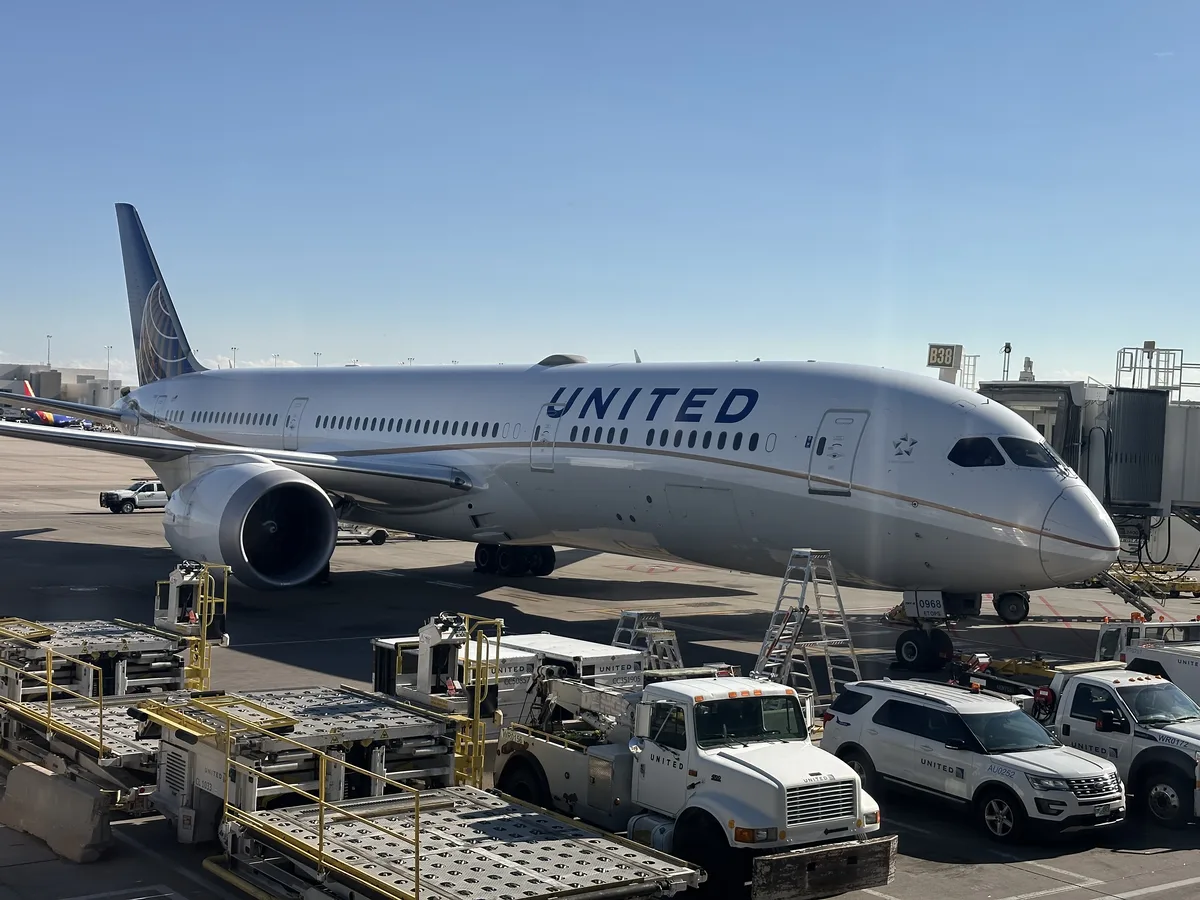
Singapore Airlines uses the 787-10 as its medium-haul regional widebody, deploying it on routes across Southeast Asia, China, and Australia where the seat count economics work and the range isn't limiting. United Airlines operates them on transatlantic routes and US domestic premium services, where the larger cabin generates more premium revenue per flight. Korean Air uses the -10 on its shorter Asian routes, making good use of the capacity without pushing the range limits.
The 787-10 illustrates the internal competition within an aircraft family: the -9 and -10 are direct competitors for some missions. An airline choosing between them for a 6,000 nm route is essentially deciding between higher utilization efficiency (more seats per departure) and operational flexibility (longer range opens more mission options). Airlines that need a true high-frequency hub feeder tend toward the -10; those prioritizing route optionality tend toward the -9. Both choices are commercially defensible, which is why Boeing offers the choice in the first place.