Aérospatiale/BAC — fun
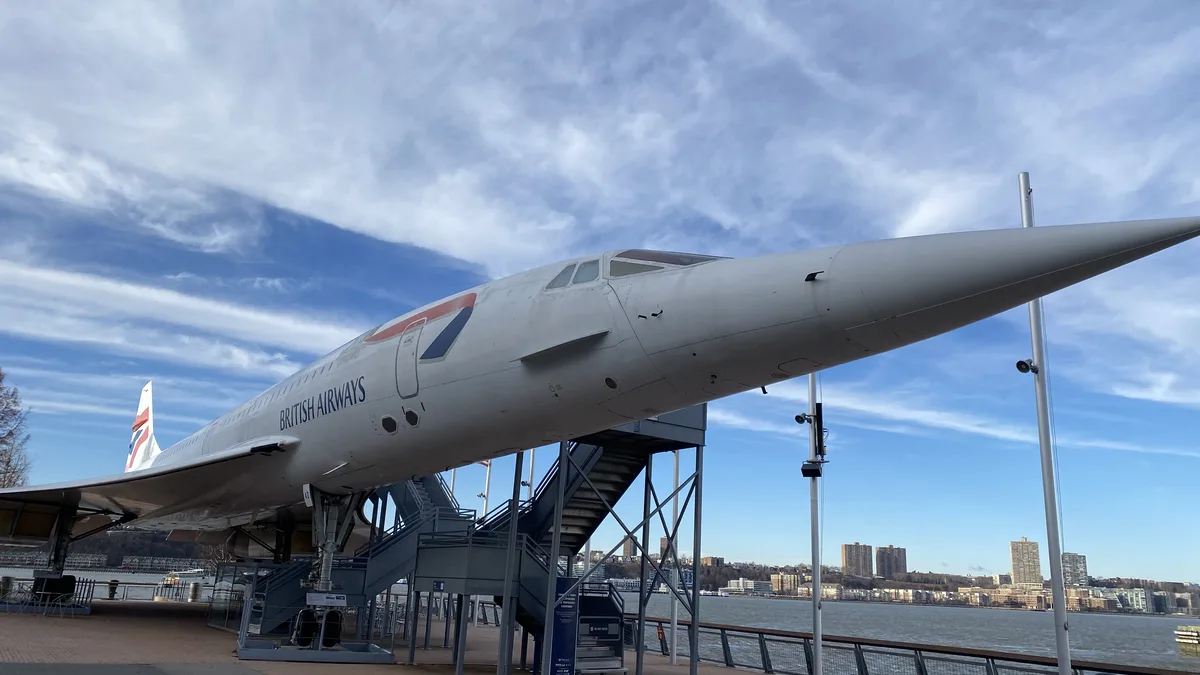
Pictured: British Airways Concorde on static display
Explore the Concorde's range on the map →The Aérospatiale/BAC Concorde can fly up to 4,500 nautical miles (8,334 km) as a ferry flight with no payload. With a full load of passengers and cargo, the range drops to approximately 3,100 nm (5,741 km). At its cruise speed of 1176 kt, that's about 3h 50m of non-stop flying at ferry weight, or 2h 38m fully loaded.
Concorde is the most extreme data point in commercial aviation history, and the numbers on this page are not exaggerated. The four Rolls-Royce/Snecma Olympus 593 engines — each producing 38,050 lbf of thrust with afterburner — consumed approximately 5,600 US gallons of Jet-A per hour at Mach 2.0 cruise. The aircraft carried between 92 and 128 passengers depending on configuration. British Airways and Air France operated it on that basis for 27 years.
The aerodynamics that make Concorde extraordinary also explain its fuel economics. The slender ogival delta wing was optimized for supersonic cruise at Mach 2.0 and 55,000 feet — a regime where wave drag is manageable and the thin upper atmosphere reduces aerodynamic friction. Below Mach 1.0, the same wing is aerodynamically mediocre. The mandatory subsonic segments over populated areas (noise regulations prohibited supersonic flight overland) forced the aircraft to operate inefficiently on every departure and approach. The climb to cruise altitude consumed more fuel per nautical mile than the cruise itself.
The JFK–London Heathrow crossing — Concorde's defining mission — is 3,450 nautical miles. Concorde's max-payload range is 3,100 nautical miles. That means the route that made Concorde famous was 350 nm beyond its efficient operating envelope: every JFK departure required trading payload weight against fuel to complete the crossing. The 100-seat British Airways configuration was not passenger-friendliness; it was a fuel margin calculation. Concorde could be certified for 128 seats. Filling them would have prevented it from reaching London.