Boeing — Commercial
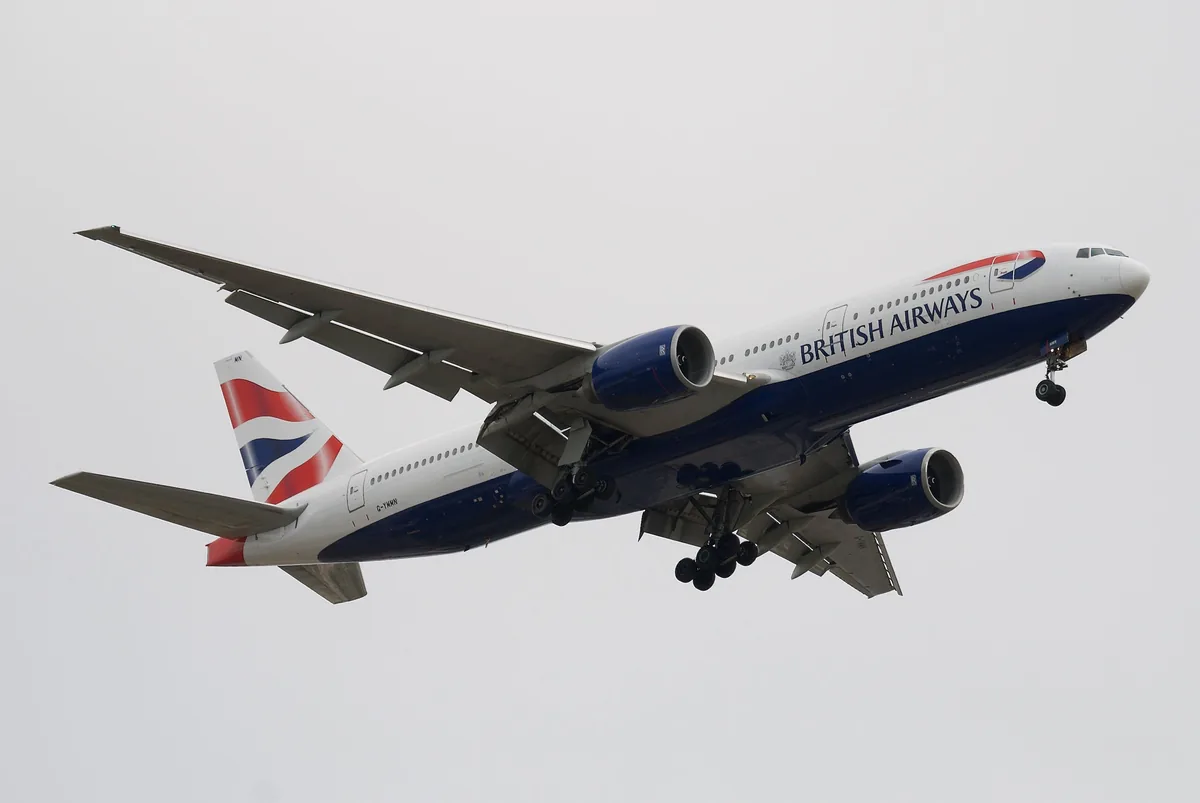
Pictured: Boeing 777-200ER
Explore the 777-300ER's range on the map →The Boeing 777-300ER can fly up to 9,080 nautical miles (16,816 km) as a ferry flight with no payload. With a full load of passengers and cargo, the range drops to approximately 5,690 nm (10,538 km). At its cruise speed of 490 kt, that's about 18h 32m of non-stop flying at ferry weight, or 11h 37m fully loaded.

Range shown at max payload (full passenger load), with average wind conditions
The 777-300ER is the aircraft that Emirates used to build one of the most ambitious airline networks in history. Stretching the 777-200ER by 10.1 metres, the -300ER carries up to 396 passengers (in Emirates' standard configuration) with a range of 7,370 nautical miles - enough to connect Dubai with virtually every major city on Earth without a stop. Emirates' 130+ aircraft fleet made it the single largest operator of any widebody variant at any airline in history, and the network it enabled - Dubai as the world's busiest international hub - reshaped global long-haul travel.
Air France, Qatar Airways, Korean Air, and Cathay Pacific also operate large -300ER fleets, using them on their own flagship long-haul routes. The aircraft's high MTOW - 352 metric tons - requires careful runway assessment at high-altitude airports, but its GE90-115B engines (the most powerful commercial engines ever certified) generate enough thrust to handle demanding departures from cities like Bogotá, Nairobi, and Johannesburg. It's a cargo network as much as a passenger network: the -300ER's 170 cubic metres of belly space generates significant freight revenue on every sector.
Production ended with the 777-300ER in the early 2020s as the 777X ramp-up began. The type will remain the dominant ultra-long-haul widebody for most of the 2030s - with so many examples in service and airframes with decades of life remaining, retirement won't happen quickly. Emirates specifically has structured its fleet plan to transition gradually to 777X, meaning the -300ER will be central to its operations well into the 2030s.