Boeing — Commercial
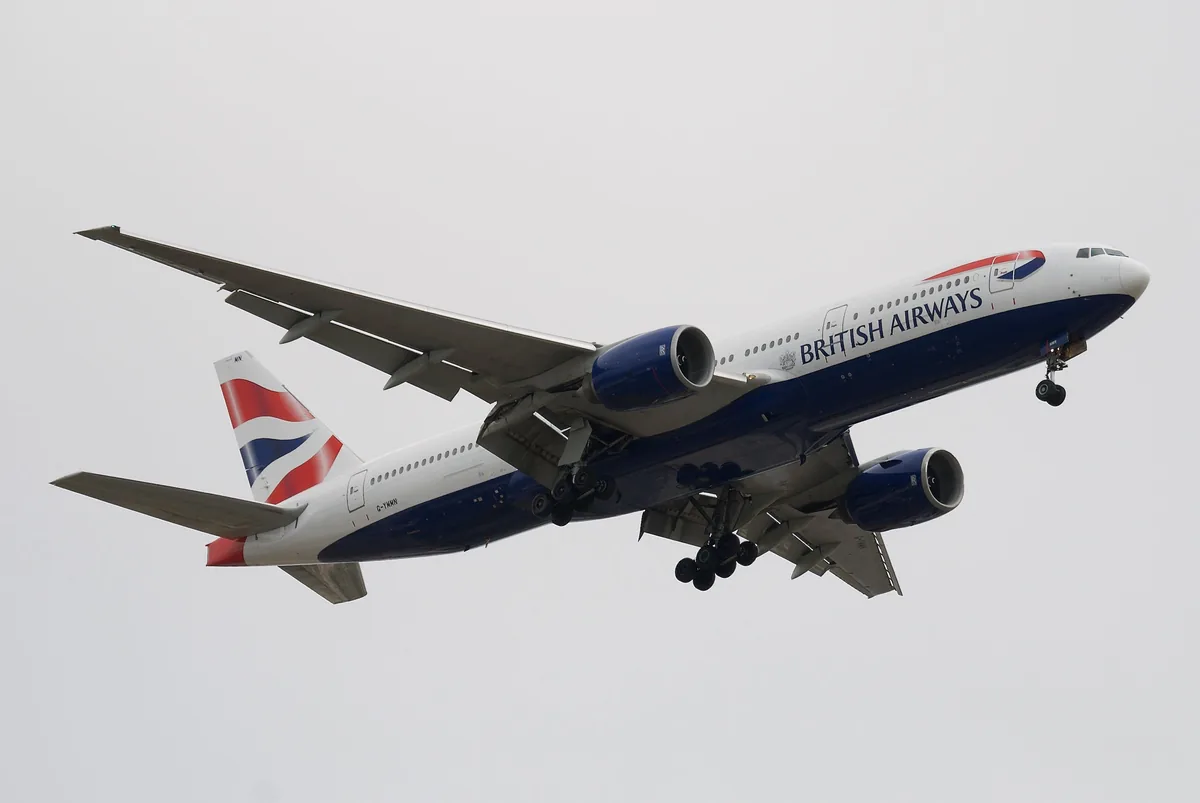 Explore the 777-200ER's range on the map →
The Boeing 777-200ER can fly up to 9,530 nautical miles (17,650 km) as a ferry flight with no payload. With a full load of passengers and cargo, the range drops to approximately 5,800 nm (10,742 km). At its cruise speed of 490 kt, that's about 19h 27m of non-stop flying at ferry weight, or 11h 50m fully loaded.

Range shown at max payload (full passenger load), with average wind conditions
The 777-200ER is the aircraft that wrote the rulebook for twin-engine long-haul. When Boeing launched the 777 program in 1990, critics questioned whether airlines would trust a twin-engine jet with 314 passengers over the Pacific or Atlantic. Boeing responded by engineering the aircraft to a standard that made ETOPS-180 certification achievable from day one - meaning if one engine failed over the ocean, the 777 could fly on the remaining engine for three hours to reach an airport. No previous twin had been certified to this standard at this size.
United Airlines holds the ultimate 777-200ER record: Newark–Hong Kong nonstop, covering 12,980 km in roughly 16 hours. The route set a record, and more importantly it proved that twin-engine jets could competently serve the ultra-long-haul missions previously reserved for four-engine 747s. The economics were transformative - a 777 burns roughly 30% less fuel than a 747-400 per seat on the same mission. Airlines that had been struggling with 747 economics on thin transpacific routes suddenly had a viable alternative.
The GE90 engines powering the 777-200ER deserve recognition: the GE90-115B variant (used on the -300ER) is the most powerful commercial engine ever built at 115,000 lbf of thrust, but even the 777-200ER's GE90-94B was the most powerful in service when it entered the fleet. The engine's 128-inch fan diameter is visible from across an airport - larger than the entire fuselage diameter of a Boeing 737. Maintaining this engine requires specialized tooling and facilities, which is one reason 777 operators tend to cluster at major hubs with the resources to support them.