Airbus — Commercial
 Explore the A340-600's range on the map →
The Airbus A340-600 can fly up to 8,680 nautical miles (16,075 km) as a ferry flight with no payload. With a full load of passengers and cargo, the range drops to approximately 5,910 nm (10,945 km). At its cruise speed of 473 kt, that's about 18h 21m of non-stop flying at ferry weight, or 12h 30m fully loaded.
Source: Airbus Orders & Deliveries, final total

Range shown at max payload (full passenger load), with average wind conditions
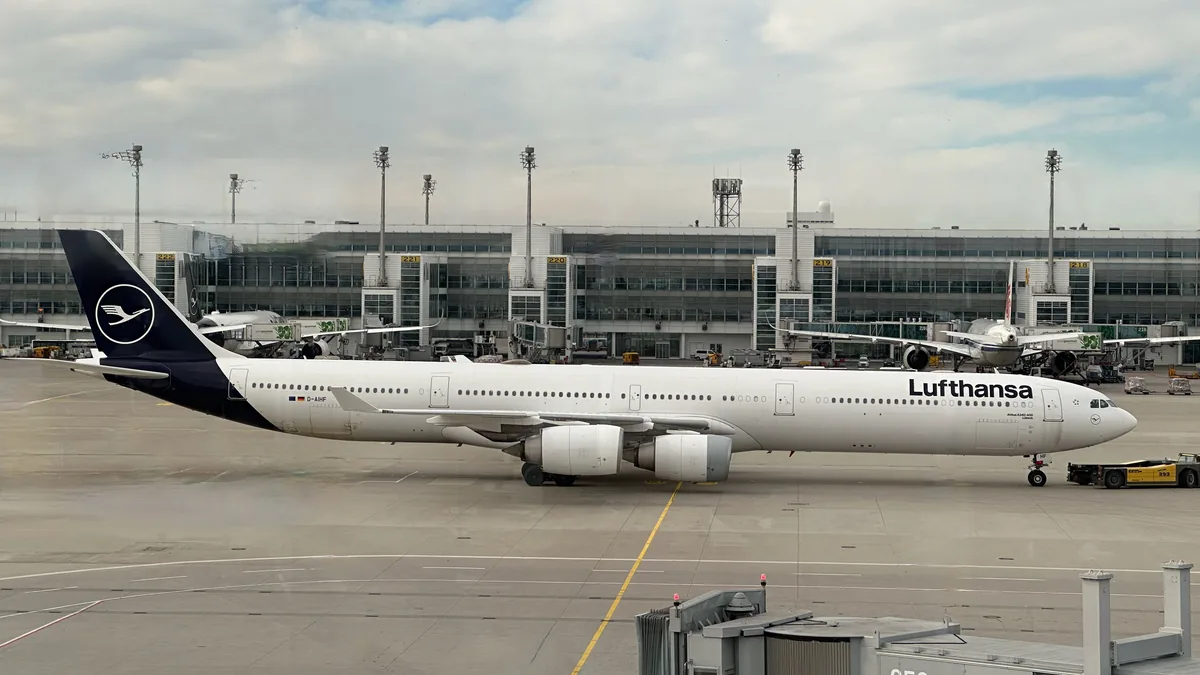
The A340-600 is aviation's cautionary tale about betting against twin-engine efficiency. Stretching 75.3 metres from nose to tail, it was the longest commercial aircraft in the world when it entered service in 2002, and its four CFM56-5C engines could push it to 7,900 nautical miles - enough to connect London with Sydney via a single stop, or to serve routes that the 777-200ER simply couldn't reach at the time. Lufthansa, Virgin Atlantic, and South African Airways operated it on their flagship routes.
The problem was economics. Four engines mean four engine overhauls, four sets of thrust reversers, and four times the maintenance paperwork. When the Boeing 777-300ER arrived with comparable range and capacity on two engines, the -600 rapidly became commercially uncompetitive. Fuel prices rising through the 2000s made the disparity worse: the -600 burned roughly 35% more fuel per seat than a 777 on the same mission. Airlines began retiring their fleets within a decade of delivery, an unusually short commercial life for a major widebody type.
Today, most A340-600s that haven't been scrapped reside in the fleets of state carriers or charter operators with cost structures less sensitive to per-seat fuel burn. The type's legacy is partly cautionary - it shows how quickly a fuel crisis can kill an aircraft family - but also partly admirable: the A340-600 was a genuine engineering achievement, and the ETOPS-free operations it offered (four engines meant no oceanic diversion airport requirements) gave some operators operational flexibility that twin-engine alternatives couldn't match.