Flight Analysis & Range Guide
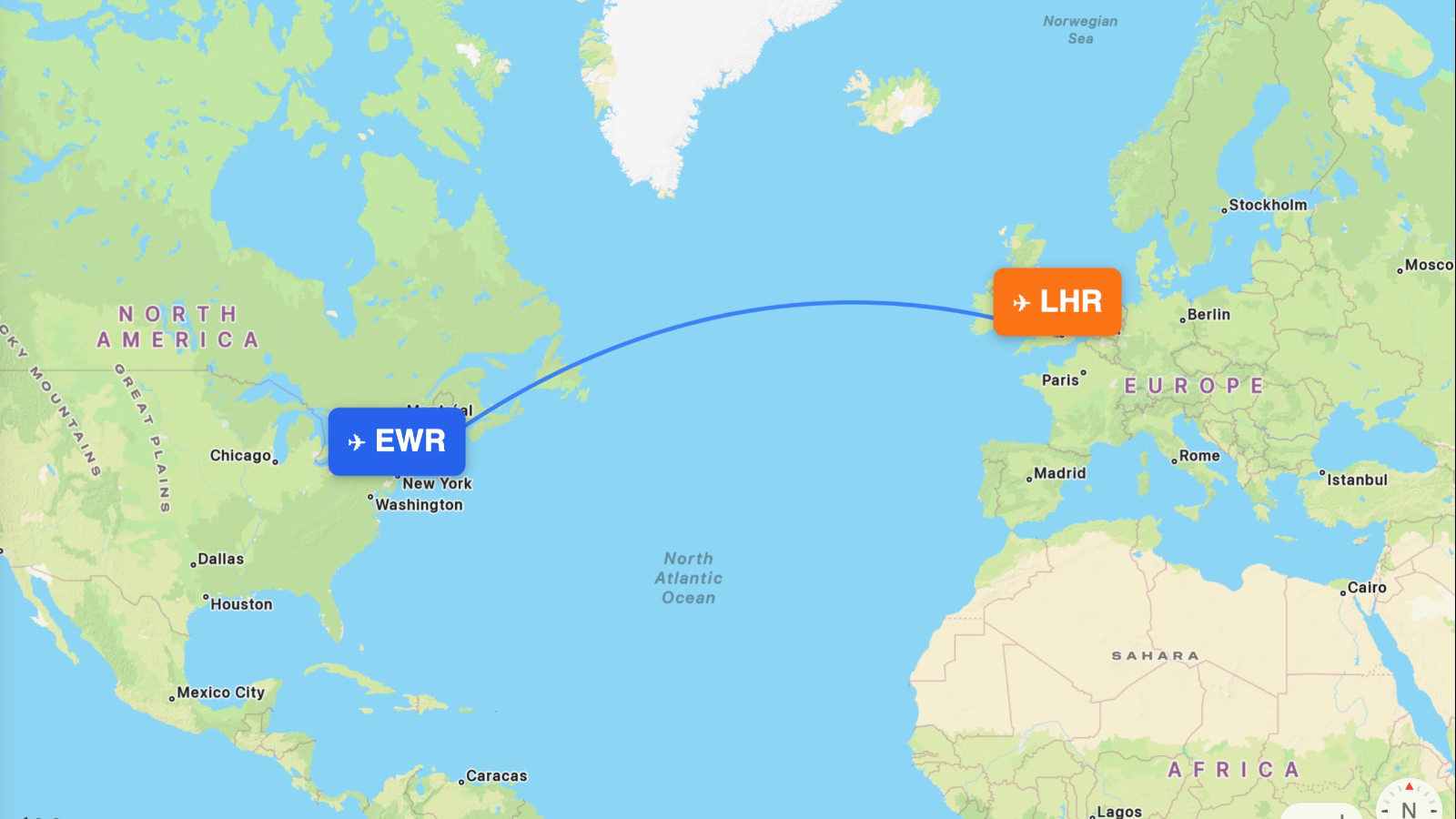
If you’ve spent any time in aviation forums, you’ve heard it: the Airbus A321XLR is the Boeing 757 replacement. It carries a similar number of passengers, it covers similar distances, and it’s the aircraft airlines are reaching for when they want to serve the thin transatlantic routes the Boeing 757 used to own. Functional entry-to-service began in late 2024 with Iberia taking the first delivery for its Madrid–Boston route. It’s close. But it’s not the same plane - and understanding why reveals a gap in the narrowbody market that has never actually been filled.
On paper, the Airbus A321XLR is better in almost every respect. Its maximum payload range is 4,700 nm against the Boeing 757-200’s 3,900 nm - a full 800-nautical-mile advantage. It burns roughly 30% less fuel per seat. It carries up to 220 passengers in a high-density layout, broadly comparable to the Boeing 757’s 239.
But then you look at runway requirements, and the story changes. At maximum takeoff weight, sea level, standard conditions, the Boeing 757-200 needs 6,500 ft of runway. The Airbus A321XLR needs 7,900 ft - a full 1,400 ft more. That gap isn’t a footnote. It is the entire reason the Boeing 757 earned its legendary reputation.
The Boeing 757 was built in an era when Boeing was obsessed with short-field performance. Its Rolls-Royce RB211 or Pratt & Whitney PW2037 engines produced enormous thrust relative to the aircraft’s weight, giving it a climb rate that left other narrowbodies in the dust. Pilots nicknamed it the rocket ship.
That thrust-to-weight ratio meant the Boeing 757 could carry a full passenger load out of airports that would have required a competitor to offload cargo, cap ticket sales, or swap in a smaller plane. Reagan National (DCA) - the airport that serves Washington D.C. but has a primary runway of only 7,169 ft - became a Boeing 757 stronghold. American Airlines, Delta, and United used it to operate long nonstop routes to the West Coast that a heavier, less powerful narrowbody couldn’t legally serve at full weight. The Airbus A321XLR, requiring 7,900 ft at MTOW, cannot replicate that at full load.
The same logic applied to high-altitude airports like Mexico City (MEX) at 7,300 ft elevation, or airports with terrain-constrained climb paths like Innsbruck. Thin air reduces engine thrust and wing lift - a plane that needs less runway at sea level has more headroom to absorb those penalties before it runs out of options.
Boeing stopped building the 757 in 2004. In the two decades since, it has never produced a narrowbody with comparable field performance at comparable range. The Boeing 737 MAX 10 is Boeing’s longest-range MAX variant - and it needs 8,500 ft of runway at MTOW while topping out at just 3,300 nm at maximum payload. It is shorter-ranged and more runway-hungry than a Boeing 757, in a smaller airframe.
Boeing’s proposed answer was the New Midsize Airplane (NMA) - sometimes called the Boeing 797 - a clean-sheet design intended to slot between the Boeing 737 MAX and the Boeing 787 Dreamliner. It would have had the range, the passenger count, and the economics to fill the gap. Boeing announced studies, showed concept renders, and then quietly shelved the program. As of 2025, the NMA does not exist and has no confirmed launch date.
In the meantime, Airbus has been filling the niche with the Airbus A321neo LR and Airbus A321XLR. Airlines that once ordered Boeing 757s - Icelandair, American Airlines, United Airlines, Norse Atlantic - are ordering Airbus A321XLRs instead. It is a remarkable commercial achievement for Airbus, and a conspicuous gap in Boeing’s lineup.
For most routes the Boeing 757 flew - yes, functionally. The Airbus A321XLR matches or exceeds its range, carries comparable passenger numbers, and does it with dramatically better fuel efficiency. Airlines that need to connect mid-sized US cities to Europe, or serve thin transatlantic routes that can’t fill a Boeing 787 Dreamliner, have found a workable solution in the XLR.
But for the specific mission the Boeing 757 was uniquely suited for - heavy payloads out of short runways, steep climbs out of terrain-constrained airports, full loads from hot-and-high locations - there is no replacement. That niche sits unfilled, and the Boeing 757s still flying are commanding eye-watering prices on the used market as a result.
See range, specs, and airline configs on PlaneRange:
A321-200 A321neo LR A321XLR 737 MAX 10 757-200 757-300 Visualize on the Map →