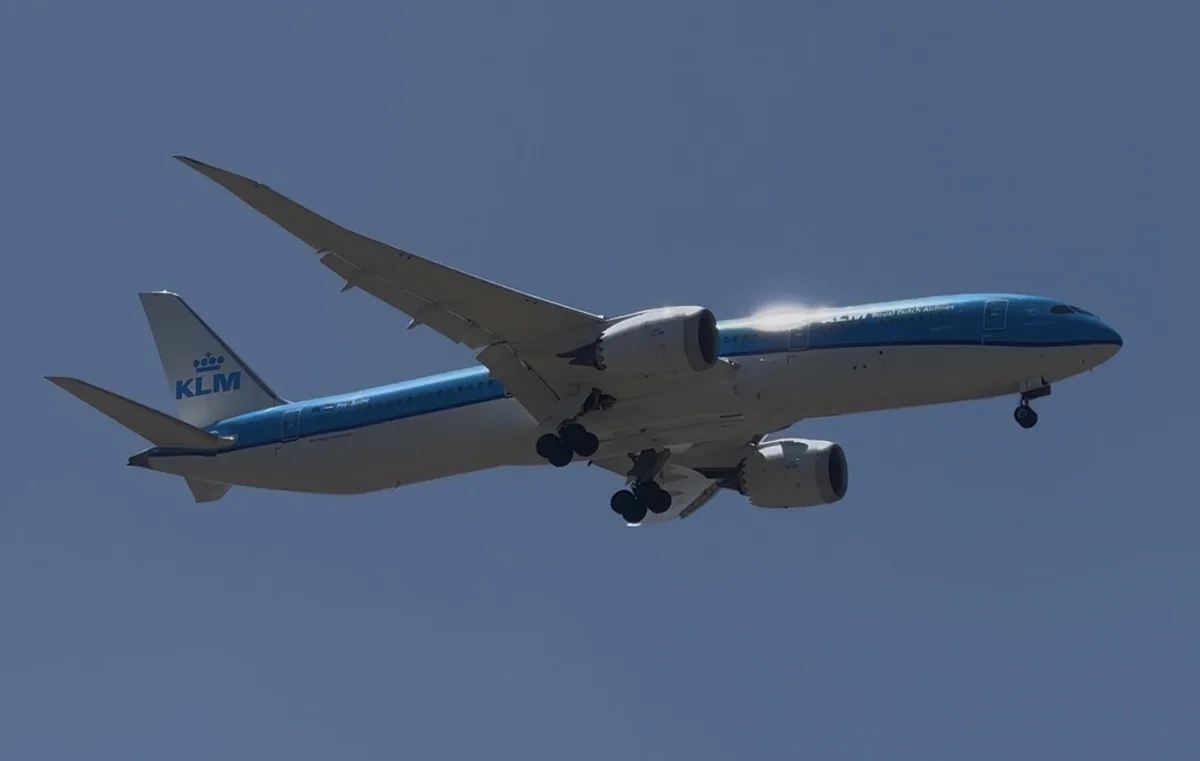
While Alaska Airlines has historically looked North, South, and West, the addition of the Boeing 787-9 Dreamliner has allowed the airline to look East. In 2026 it launched its first transatlantic flights: Seattle to Rome (FCO) and London Heathrow (LHR) on the 787-9, plus Seattle to Reykjavik (KEF) on the 737 MAX 8.
Recent buzz in aviation has focused on transatlantic narrowbodies like the A321neo LR and the A321XLR. However, those aircraft are optimized for East Coast departures (like Boston to Dublin). From the West Coast, the geography is completely different.
Seattle to London is 4,158 nautical miles and Rome is 4,929. With 180 passengers an A321XLR reaches about 4,800 nm in still air, which covers London on paper but makes the westbound winter return tight, and an A321LR gets about 4,000. Reykjavik is the exception: at 3,138 nm it is within reach of a full 737 MAX 8 (about 3,500 nm), which is what Alaska flies there. The 787-9 reaches about 7,700 nm with a full cabin and about 5,300 nm at maximum payload, so London and Rome sit well inside its ring from SEA with every seat filled. Only a maximum cargo load gets tight on the long end.
Flying from Seattle to Europe also means riding the jet stream. Eastbound flights benefit from strong tailwinds, cutting flight time and fuel burn. Westbound returns face headwinds. With a full cabin the 787-9 has fuel capacity to spare, so on the 4,929 nm Rome return the penalty lands on cargo, not passengers.
See range, specs, and airline configs on PlaneRange:
737 MAX 8 787-9 Visualize on the Map →New routes pushed to their limits, new aircraft, and features as they land.