Embraer — Commercial
 Explore the E190's range on the map →
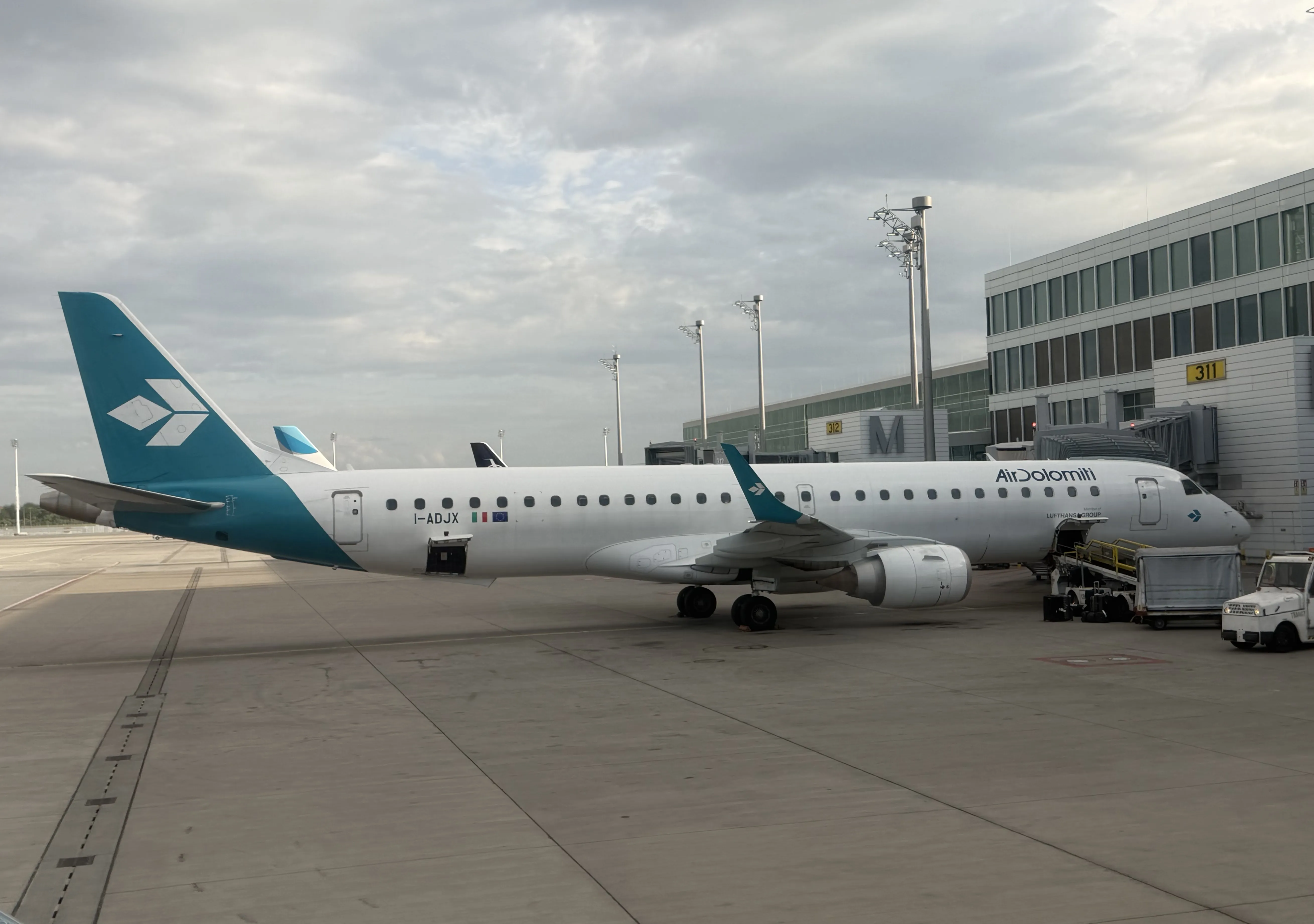
The Embraer E190 can fly up to 2,780 nautical miles (5,149 km) as a ferry flight with no payload. With a full load of passengers and cargo, the range drops to approximately 1,800 nm (3,334 km). At its cruise speed of 447 kt, that's about 6h 13m of non-stop flying at ferry weight, or 4h 2m fully loaded.

Range shown at max payload (full passenger load), with average wind conditions
The E190 sits at the top of the original E-Jet family - 96–114 seats, too large for US regional scope clauses but perfect for short-haul mainline operations at carriers who wanted narrowbody economics without the size of an A320. JetBlue was the launch customer and used E190s to crack into New York's short-haul market with frequencies and city pairs that a larger aircraft couldn't profitably serve. The E190 let JetBlue operate Boston–Washington ten times a day rather than four, generating more schedule choice than legacy carriers could match at the same city pair.
Azul Brazilian Airlines built its entire initial network on E190s, connecting smaller Brazilian cities that the 737-800 and A320 operators had ignored as too thin. CEO David Neeleman (also JetBlue's founder) bet that connecting Brazil's hundreds of secondary cities would generate demand that the major carriers were leaving on the table. He was right: Azul grew from 0 to 200+ aircraft in a decade, and the E190 was the vehicle that made those thin routes viable in the early years.
The E190 is being displaced in new orders by the E190-E2, which offers 17% better fuel burn and quieter operation. But carriers that fly the first-generation -190 on mature routes will retain them until airframe retirement - the economics of a paid-off aircraft still make sense on stable, profitable city pairs where efficiency gains don't justify the cost of new deliveries.