Boeing — Commercial
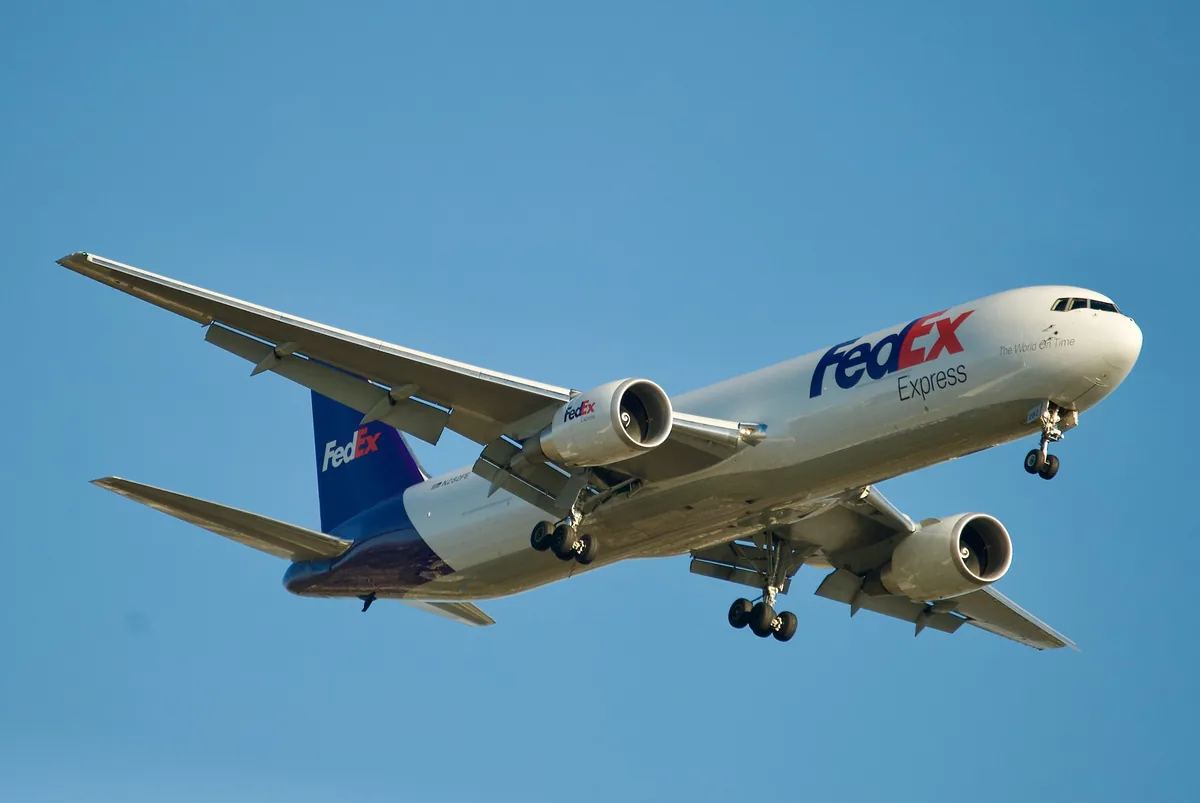
Pictured: Boeing 767-300ER
Explore the 767-400ER's range on the map →The Boeing 767-400ER can fly up to 6,570 nautical miles (12,168 km) as a ferry flight with no payload. With a full load of passengers and cargo, the range drops to approximately 3,710 nm (6,871 km). At its cruise speed of 459 kt, that's about 14h 19m of non-stop flying at ferry weight, or 8h 5m fully loaded.

Range shown at max payload (full passenger load), with average wind conditions
The 767-400ER is the rarest of the mainline widebody variants - only 37 were built, all for United Airlines and Delta Air Lines. The stretch added 6.4 metres over the -300, bringing capacity to 245–304 passengers, and the ER's additional fuel capacity extended range to roughly 6,000 nm. In theory, it was the 767 that should have competed with the A330-200 on long, thin transatlantic routes. In practice, the A330-200 launched at roughly the same time with better fuel efficiency, more orders, and a lower acquisition cost.
United deployed the -400ER on its Newark–Hawaii routes and select transatlantic services, where its combination of capacity and range worked well. Delta used it on similar high-demand mid-range transoceanic routes. Both carriers have gradually wound down their fleets as 787-9s and A330-900neos replaced them, and no new -400ER examples have been ordered in over two decades.
The -400ER represents a recurring theme in Boeing's widebody strategy: the stretched version of an established type tends to sell far fewer aircraft than the baseline. The 747-8, 757-300, and 767-400ER all suffered from this pattern. Operators who need more capacity tend to jump to the next size category rather than pay for a stretch that keeps them on the same airframe family. The lesson isn't lost on Boeing, which has been cautious about major fuselage stretches in recent years.