Boeing — Commercial
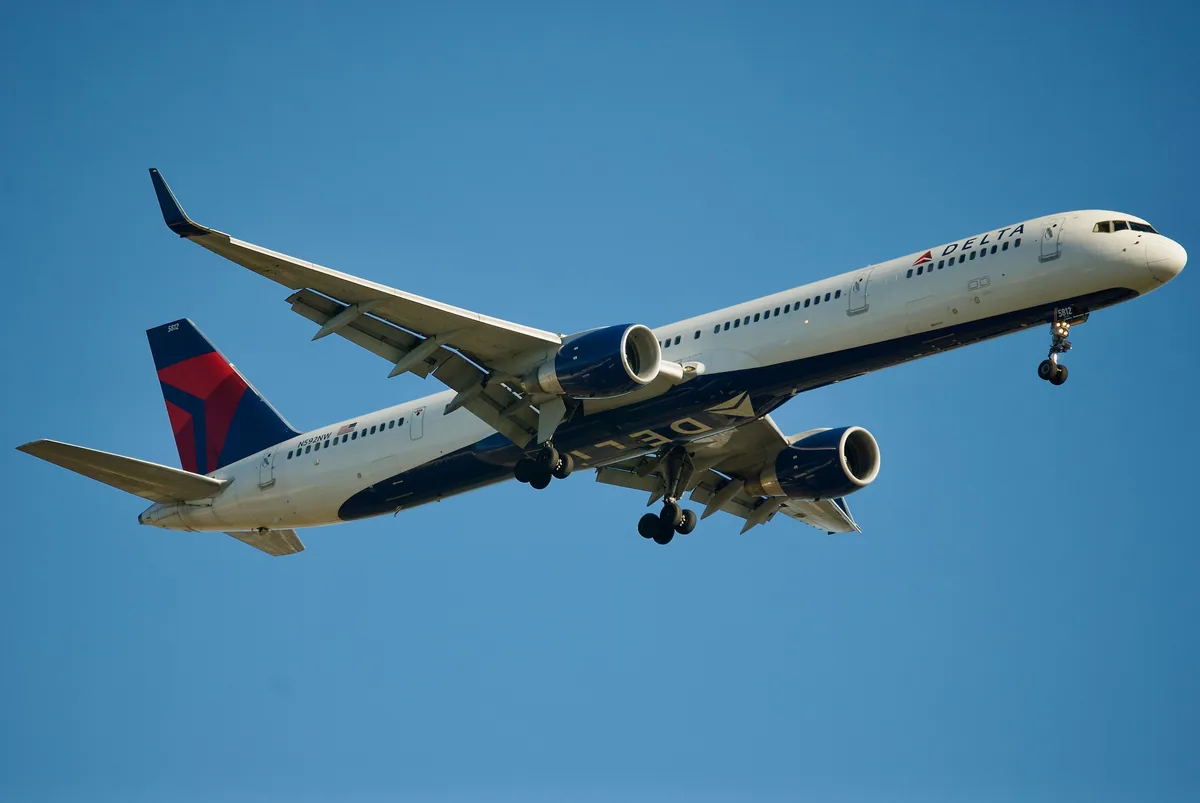 Explore the 757-300's range on the map →
The Boeing 757-300 can fly up to 4,260 nautical miles (7,890 km) as a ferry flight with no payload. With a full load of passengers and cargo, the range drops to approximately 2,410 nm (4,463 km). At its cruise speed of 460 kt, that's about 9h 16m of non-stop flying at ferry weight, or 5h 14m fully loaded.

Range shown at max payload (full passenger load), with average wind conditions
The 757-300 stretched the -200 by 7.1 metres to accommodate 240–280 passengers, making it the longest narrowbody ever built. The fuselage stretch was impressive; the commercial response was less so. Only 55 were delivered, compared to over 1,000 of the -200, because the stretch undermined the very qualities that made the -200 legendary. More seats meant more weight, which ate into the range and short-field performance that operators valued. Airlines that needed 250+ narrowbody seats were generally better served by an A321 or, for longer ranges, a small widebody.
Condor, the German leisure carrier, was the largest operator, deploying the -300 on high-density holiday routes where the extra seats paid off on short stages where range wasn't the concern. United Airlines operated a handful before retiring them in favor of 737-900ERs. The type demonstrated a recurring lesson in commercial aviation: a stretch that adds capacity without adding range tends to find a smaller market than its predecessor, especially when widebody alternatives become more affordable.
The 757-300 is now vanishingly rare in passenger service. Most examples have been parked or scrapped, with a few converted to freighters. It's a footnote in the 757 story - a commercial experiment that confirmed the -200 had found its optimal configuration, and that the unique combination of traits that made the 757 iconic couldn't simply be scaled up by adding fuselage sections.