Boeing — Commercial
 Explore the 747-8 Intercontinental's range on the map →
The Boeing 747-8 Intercontinental can fly up to 9,020 nautical miles (16,705 km) as a ferry flight with no payload. With a full load of passengers and cargo, the range drops to approximately 5,900 nm (10,927 km). At its cruise speed of 500 kt, that's about 18h 2m of non-stop flying at ferry weight, or 11h 48m fully loaded.
Source: Boeing Orders & Deliveries, final total

Range shown at max payload (full passenger load), with average wind conditions
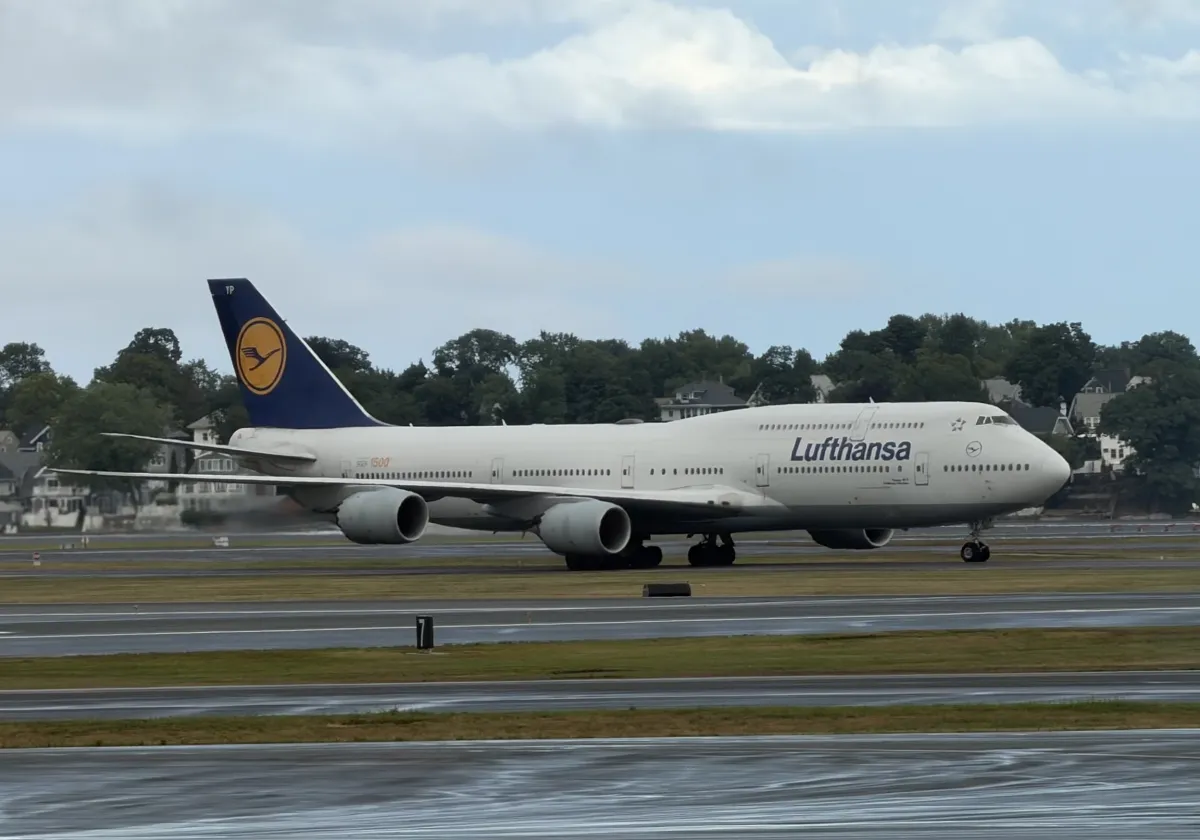
The 747-8 is the final evolution of Boeing's iconic hump-jet, stretching the classic fuselage by 5.6 metres to create the longest commercial aircraft Boeing has ever built. Its GEnx-2B engines - the same core as the 787's GEnx-1B but adapted for four-engine configuration - deliver 16% better fuel efficiency than the 747-400's powerplants, a meaningful improvement on ultra-long-haul sectors. But "meaningful" wasn't enough to overcome the fundamental economics of four engines versus two, and the 747-8 found only two passenger operators: Lufthansa and Korean Air.
Lufthansa was the launch customer and remains the aircraft's primary passenger advocate, operating it on Frankfurt hub routes to high-demand destinations like New York, Tokyo, and Bangkok. Korean Air operates a smaller fleet on Seoul–JFK and similar premium routes. Both carriers value the 747-8's upper deck premium cabin - which offers a quieter, more exclusive experience above the main deck - and its cargo belly volume, which generates meaningful ancillary revenue on routes with strong air freight demand.
The last 747 ever built - a 747-8F freighter delivered to Atlas Air - rolled out of Boeing's Everett factory in February 2023, ending 54 years of continuous production. The 747's design originated in 1965, and the fact that a recognizably similar aircraft was still being sold commercially into the 2020s is a tribute to the original engineering vision - and to the value of familiarity in an industry that prizes commonality. The final production 747-8 is in a museum; the design lives on in the VC-25 (Air Force One) and the next-generation Air Force One replacement.