Boeing — Commercial
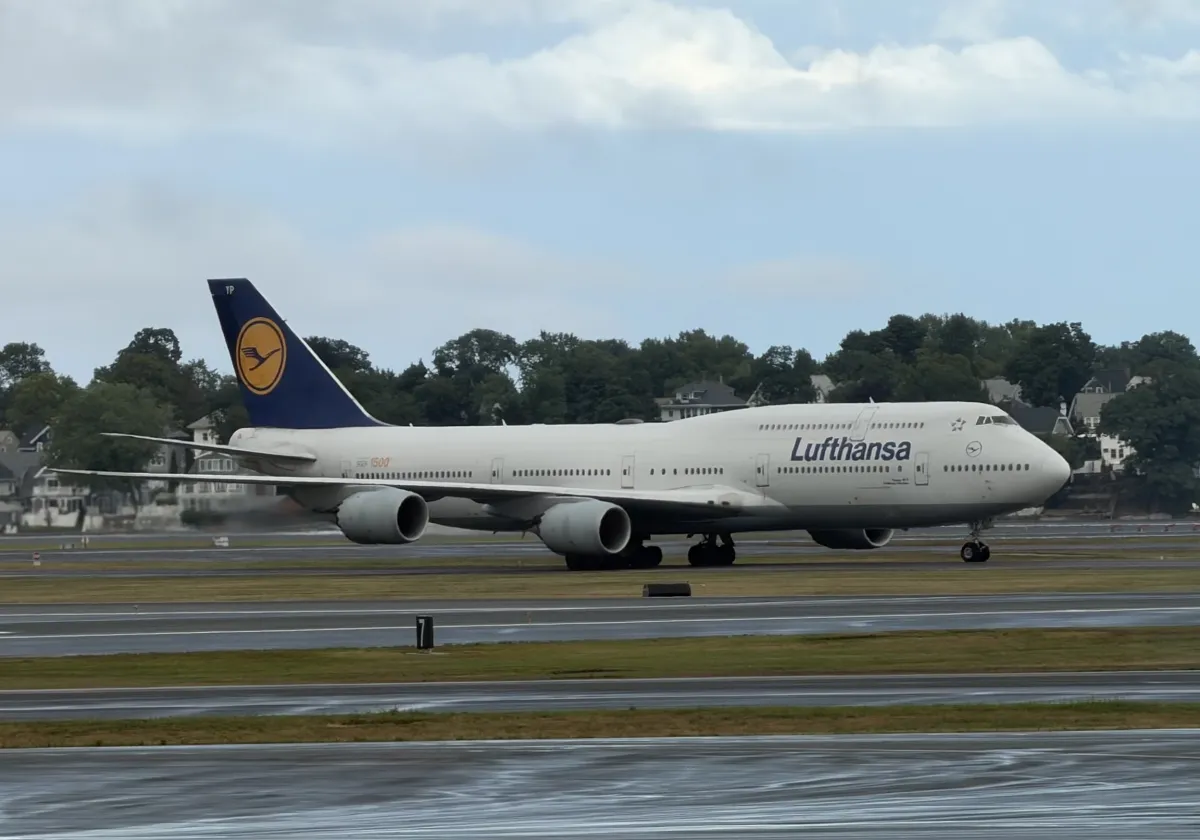
Pictured: Boeing 747-8 Intercontinental
Explore the 747-400's range on the map →The Boeing 747-400 can fly up to 8,180 nautical miles (15,149 km) as a ferry flight with no payload. With a full load of passengers and cargo, the range drops to approximately 5,750 nm (10,649 km). At its cruise speed of 490 kt, that's about 16h 42m of non-stop flying at ferry weight, or 11h 44m fully loaded.
Source: Boeing Orders & Deliveries, final total

Range shown at max payload (full passenger load), with average wind conditions
The 747-400 is the aircraft that defined intercontinental mass travel. With its signature upper deck hump, four Pratt & Whitney PW4056 or GE CF6 engines, and capacity for 416–524 passengers, the -400 connected the world's major hubs through the 1990s and 2000s at a scale no previous airliner had attempted. Lufthansa, British Airways, United, Delta, and Singapore Airlines all built their long-haul networks around it. At its peak, the "Queen of the Skies" was the most recognizable commercial aircraft in the world.
The 747-400's technical achievement was extraordinary: 13,446 km of range, composite winglets (the first major application of winglets on a widebody), and a two-pilot glass cockpit that eliminated the flight engineer position - cutting crew costs dramatically compared to the 747 Classic. The winglets alone reduced fuel burn by 3.5%, a significant saving on 10-hour-plus sectors. The aircraft's 412 metric ton MTOW required runway improvements at many airports, and its 64-meter wingspan forced gate reconfiguration worldwide.
Passenger retirements accelerated after the 747-8 arrived and, more significantly, after the 787-9 and A350 demonstrated that widebody economics could be achieved with two engines rather than four. Lufthansa and KLM retired their last passenger 747-400s in 2020 and 2021 respectively, with emotional farewell flights. The type lives on primarily in cargo configurations - UPS, Atlas Air, and Korean Air Cargo still operate large -400F fleets - and the aircraft's four-engine design remains preferred for certain cargo missions where payload, not fuel burn, is the limiting factor.