Boeing — Commercial
 Explore the 737 MAX 9's range on the map →
The Boeing 737 MAX 9 can fly up to 4,060 nautical miles (7,519 km) as a ferry flight with no payload. With a full load of passengers and cargo, the range drops to approximately 2,510 nm (4,649 km). At its cruise speed of 453 kt, that's about 8h 58m of non-stop flying at ferry weight, or 5h 32m fully loaded.
Source: Boeing Orders & Deliveries, as of Aug 2026

Range shown at max payload (full passenger load), with average wind conditions
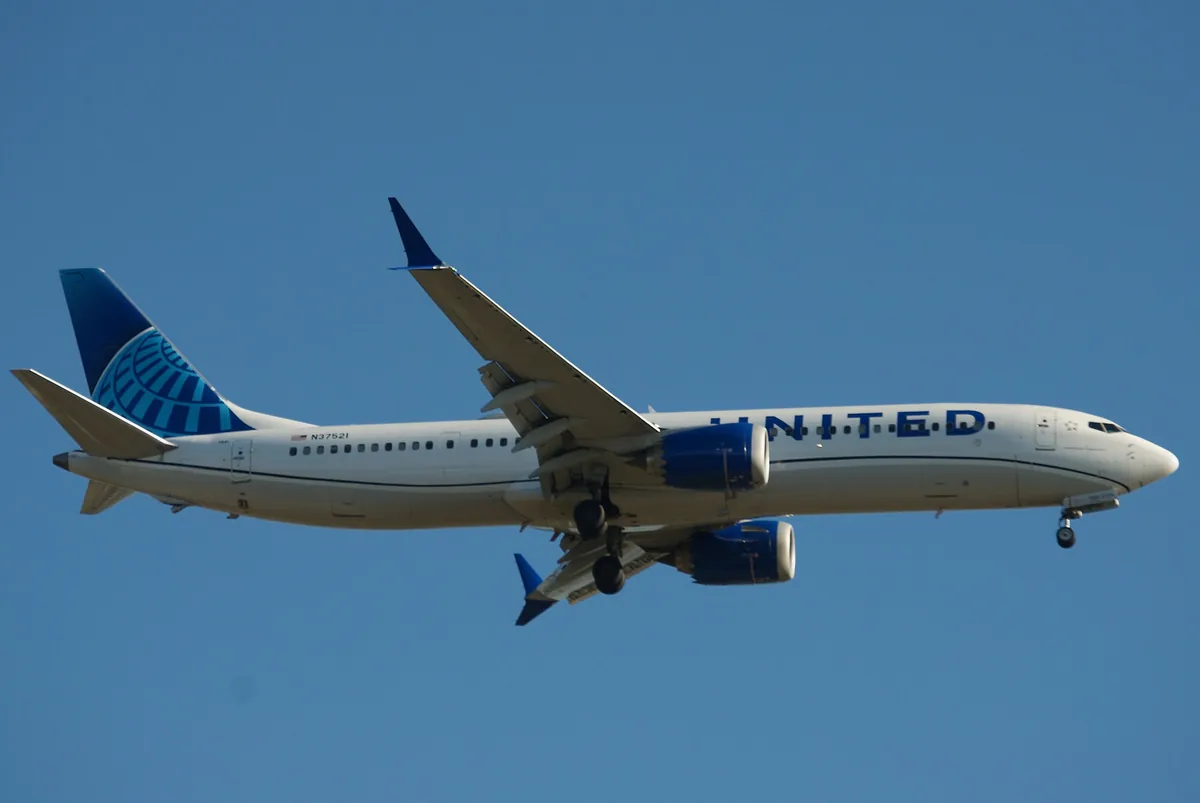
The 737 MAX 9 is the stretched MAX - 2.1 metres longer than the MAX 8, seating up to 220 passengers, and the variant that made headlines for the wrong reasons in January 2024 when an Alaska Airlines MAX 9 suffered a door plug blowout at 16,000 feet over Oregon. No fatalities occurred - the seats adjacent to the plug were unoccupied - but the incident triggered another temporary grounding of the MAX 9 fleet, an FAA production audit of Boeing's Renton factory, and a congressional inquiry that resurfaced the safety culture concerns from the 2018–2019 crashes.
Before and after that incident, the MAX 9 serves United Airlines, Alaska, and a growing list of international operators on medium-density routes where the MAX 8 runs short of seats and the MAX 10 isn't yet certified. United operates over 100 MAX 9s on domestic and transatlantic routes; Icelandair has used it for North Atlantic crossings at stage lengths that push the narrowbody envelope. The aircraft itself - absent the door plug manufacturing defect - has the same LEAP-1B engines and performance credentials as the MAX 8, with the added seat count that makes it competitive with the A321neo on dense short-haul routes.
The MAX 9's commercial future is intact, but its story underscores the cumulative toll of Boeing's manufacturing and quality control challenges through the 2020s. The FAA's production audit identified documented violations of Boeing's own quality management processes at Renton - findings that Boeing's new management team inherited and has pledged to rectify with a multi-year factory modernization program.