Boeing — Commercial
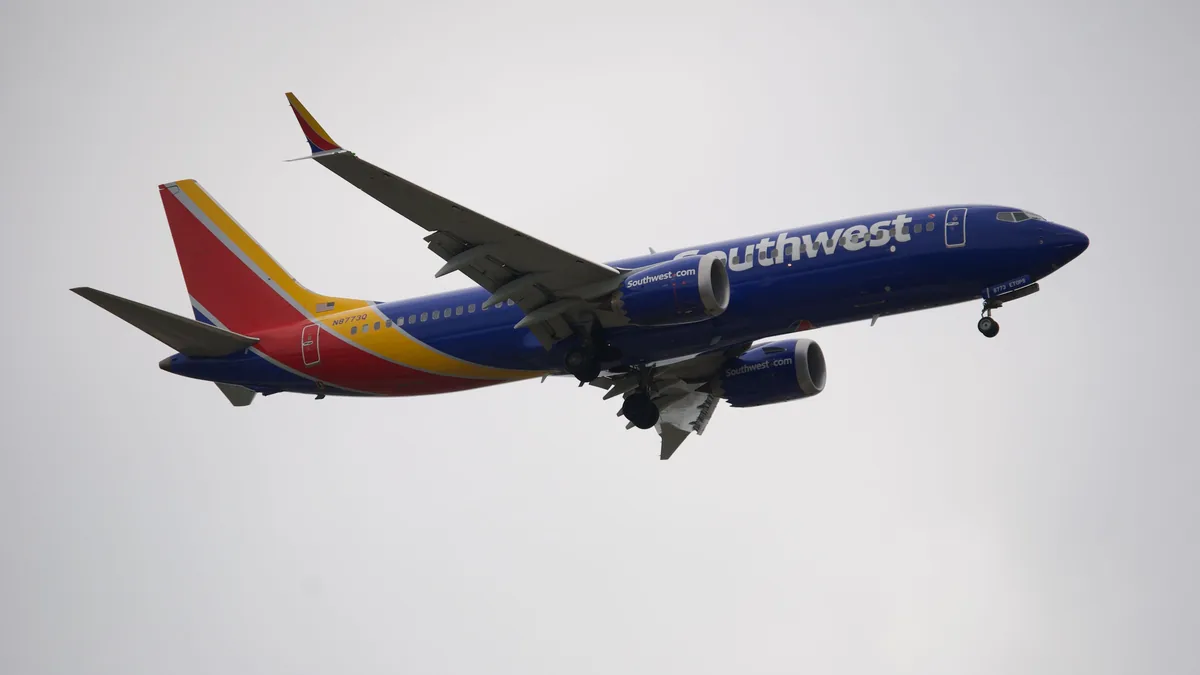
Pictured: Boeing 737 MAX 8
Explore the 737 MAX 7's range on the map →⚠️ Not yet in commercial service
The Boeing 737 MAX 7 has not entered commercial passenger service as of early 2026. Range figures are based on manufacturer specifications and may change before entry into service.
The Boeing 737 MAX 7 can fly up to 4,650 nautical miles (8,612 km) as a ferry flight with no payload. With a full load of passengers and cargo, the range drops to approximately 2,840 nm (5,260 km). At its cruise speed of 453 kt, that's about 10h 16m of non-stop flying at ferry weight, or 6h 16m fully loaded.
Source: Boeing Orders & Deliveries, as of Aug 2026
The 737 MAX 7 is Boeing's most troubled clean-sheet-that-wasn't. Replacing the 737-700, it carries 130–138 passengers on LEAP-1B engines that deliver 14% better fuel efficiency than the CFM56-powered predecessor. On paper, it's exactly what Southwest Airlines needed to replace an aging -700 fleet. In practice, the MAX 7 entered a prolonged certification limbo that delayed its entry into service by years.
The MAX family's MCAS (Maneuvering Characteristics Augmentation System) software - implicated in the 2018 and 2019 fatal crashes of the MAX 8 and MAX 9 - required comprehensive re-engineering across all MAX variants. But the MAX 7 faced an additional hurdle: new FAA regulations requiring updated flight crew alerting systems triggered a dispute between Boeing and the regulator about whether the requirement applied retroactively to a variant already in the certification pipeline. Southwest, which ordered 280 MAX 7s, watched the delays accumulate.
For avgeeks, the MAX 7 is significant because its fate illustrates how regulatory frameworks struggle to keep pace with incremental aircraft development. The original 737 was certified in 1967, and Boeing has been amending that certification continuously rather than seeking a new type certificate - a process that concentrates 60 years of engineering decisions into an increasingly complex regulatory document. The MAX crisis forced a reckoning with whether that approach is sustainable.