Boeing — Commercial
 Explore the 737-900ER's range on the map →
The Boeing 737-900ER can fly up to 3,500 nautical miles (6,482 km) as a ferry flight with no payload. With a full load of passengers and cargo, the range drops to approximately 2,000 nm (3,704 km). At its cruise speed of 447 kt, that's about 7h 50m of non-stop flying at ferry weight, or 4h 28m fully loaded.

Range shown at max payload (full passenger load), with average wind conditions
The 737-900ER (Extended Range) is the corrected version of the 737-900 - Boeing's admission that the original stretch was under-fueled. By adding two optional fuel tanks (Auxiliary Fuel Tanks, or AFTs) and a strengthened structure to handle the extra weight, the -900ER recovered the range deficit and created a capable high-density narrowbody with competitive performance across the US domestic and Pacific island markets.
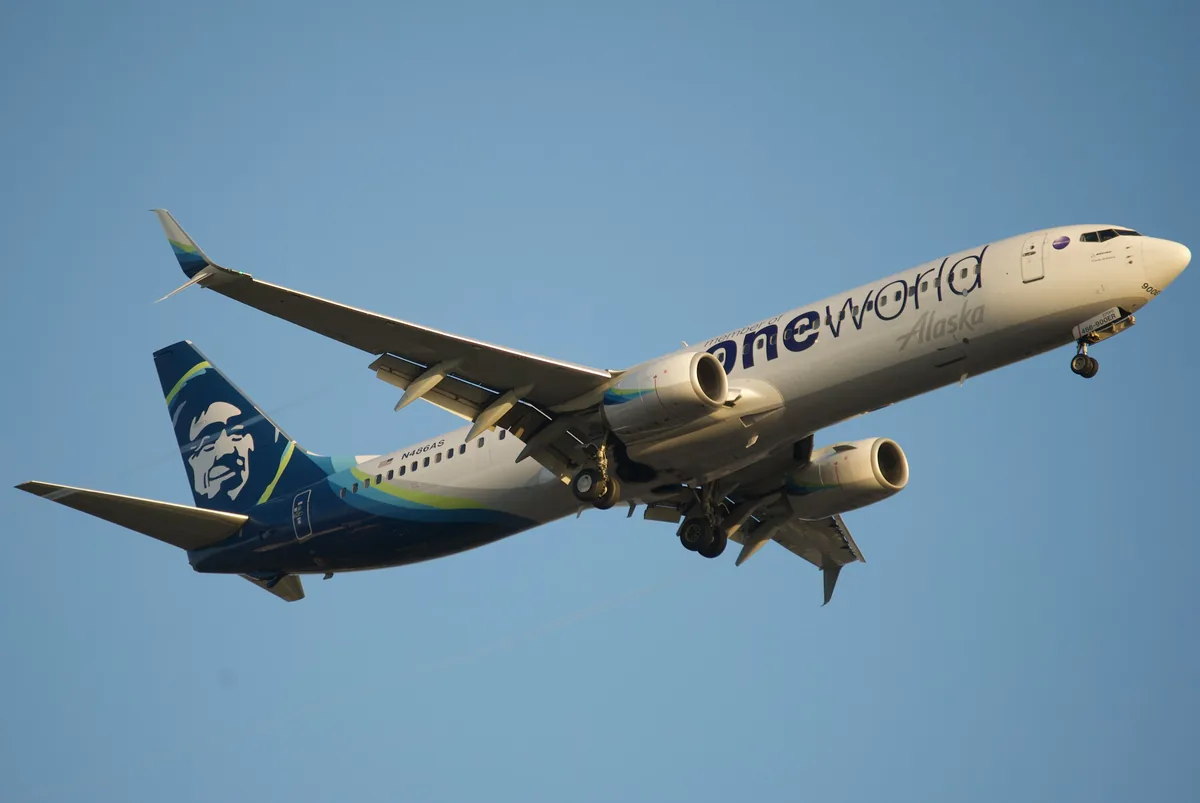
Alaska Airlines flies 79 of them at 178 seats (16 First, 30 Premium Class, 132 Main) and retired its last original -900s in 2025. The -900ER is a mainstay of Alaska's Hawaii flying, where the 2,326 nm Seattle–Honolulu sector leaves a full cabin only a few hundred miles of margin in still air, and less once a headwind sets in. United flies even more of them, and Lion Air in Indonesia uses the type on dense island-hopping routes across the archipelago - a very different mission from Alaska's, but similarly suited to the -900ER's combination of capacity and range.
The -900ER demonstrated Boeing's pragmatic approach to aircraft development: where Airbus tends to produce clean-sheet designs, Boeing's preference has historically been to stretch and re-engine proven airframes. The 737 family is the extreme example of this philosophy - the same basic airframe stretched and modified across six decades, generating significant maintenance savings for operators with long Boeing commitments, while accumulating the design compromises that eventually led to the MAX's MCAS problems. The -900ER was the last "clean" variant before those complications arrived.