ATR — Commercial
 Explore the ATR 72-600's range on the map →
The ATR ATR 72-600 can fly up to 1,528 nautical miles (2,830 km) as a ferry flight with no payload. With a full load of passengers and cargo, the range drops to approximately 825 nm (1,528 km). At its cruise speed of 255 kt, that's about 5h 60m of non-stop flying at ferry weight, or 3h 14m fully loaded.

Range shown at max payload (full passenger load), with average wind conditions
The ATR-72 is the world's best-selling turboprop airliner, and for good reason: it connects communities that jets can't reach economically. With two Pratt & Whitney Canada PW127 turboprop engines and a maximum of 78 seats, the ATR-72 is designed for short sectors - routes under 400 miles - where the turboprop's slower cruise speed is offset by dramatically lower operating costs per seat than a comparable regional jet. At sector lengths below 300 miles, a turboprop actually arrives at similar gate-to-gate times as a jet because the jet spends more time climbing to cruise altitude and descending, while the turboprop is already at cruise from shortly after takeoff.
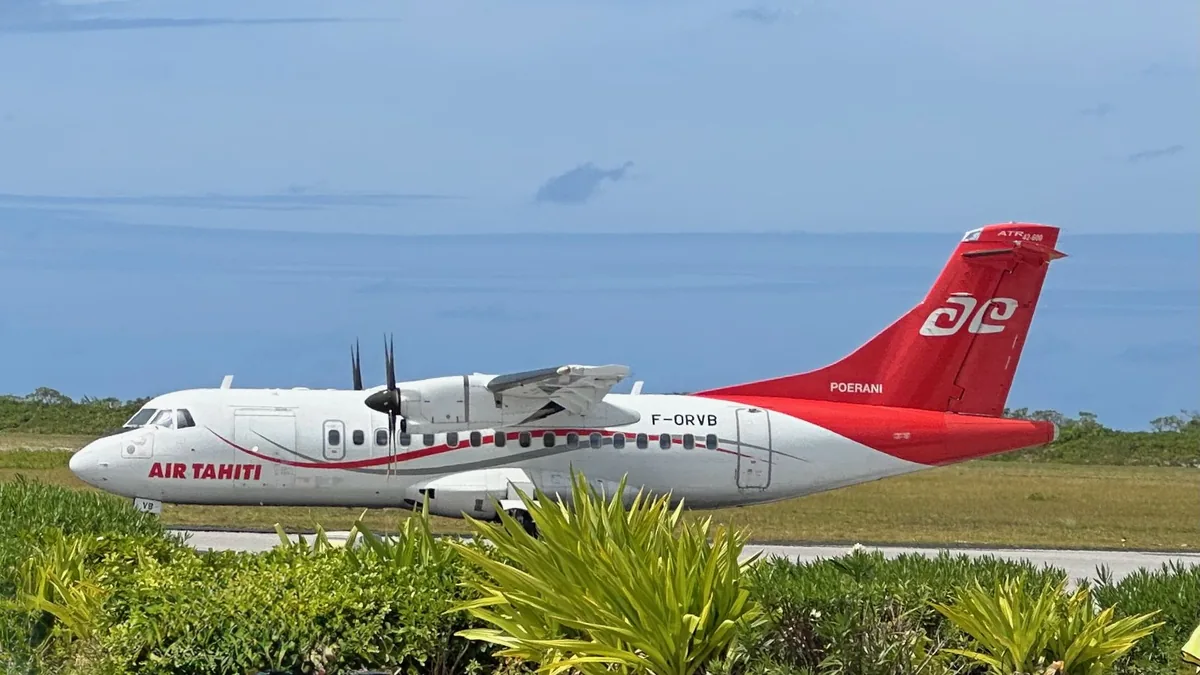
Air Tahiti built its entire inter-island network on ATR-72s, connecting the remote atolls of French Polynesia with Papeete in conditions that require careful weight management, challenging short-field operations, and meticulous fuel planning at islands with limited diversion options. The ATR-72's short-field performance - able to operate from strips as short as 4,500 feet - makes it the only commercial airliner that can serve many Pacific island airports. In Alaska, similar communities depend on the ATR-72 for year-round connectivity.
The ATR-72 600 series, the current production variant, adds a modern Thales avionics suite, improved cabin design, and slightly better engine management. ATR (a joint venture between Airbus and Leonardo) has received orders from carriers across five continents, and the backlog remains healthy as regional connectivity investments continue in developing aviation markets. The aircraft will likely remain in production into the 2030s - there is no jet substitute at this size class and cost level that can replicate what the ATR does economically.