Airbus — Commercial
 Explore the A350-1000's range on the map →
The Airbus A350-1000 can fly up to 9,760 nautical miles (18,076 km) as a ferry flight with no payload. With a full load of passengers and cargo, the range drops to approximately 5,770 nm (10,686 km). At its cruise speed of 488 kt, that's about 20h 0m of non-stop flying at ferry weight, or 11h 49m fully loaded.
Source: Airbus Orders & Deliveries, as of Aug 2026

Range shown at max payload (full passenger load), with average wind conditions
The A350-1000 stretches the -900 by 7.1 metres to accommodate up to 410 passengers, and pairs the longer fuselage with more powerful Rolls-Royce Trent XWB-97 engines - the "97" referring to 97,000 lbf of thrust, a step up from the 84,000 lbf Trent XWB-84 powering the -900. That extra thrust and a reinforced wing allow the -1000 to take off at a higher maximum weight, which translates directly into usable range: up to 8,700 nautical miles even with a full load.
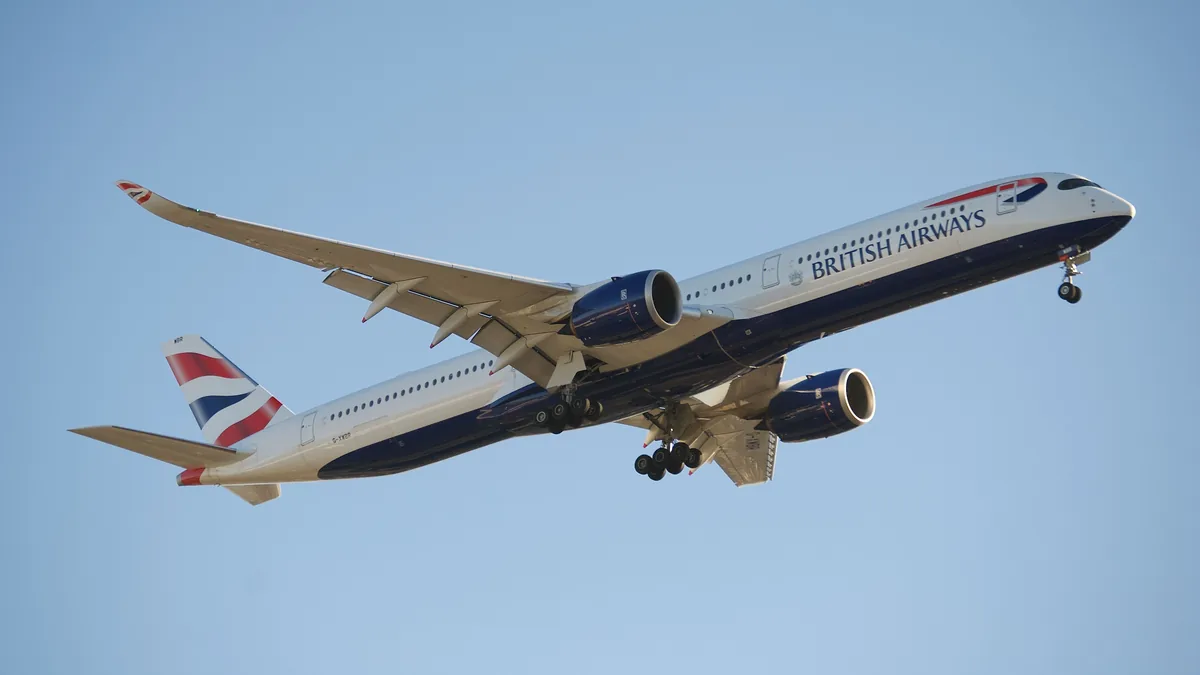
Qatar Airways deployed the -1000 on its Doha–Auckland sector - the second longest commercial route in the world at roughly 14,535 km, covering 17+ hours of flying over the Indian Ocean, Australia, and the Tasman Sea. The route exists because the A350-1000 is one of only a handful of aircraft in history capable of completing it profitably with a full passenger load. British Airways uses the type on its premium transatlantic services, fitting it with its Club Suite product in a layout that rivals the best business-class products in the world.
For avgeeks, the -1000 has a quirk worth noting: Airbus had to redesign the main landing gear to accommodate the higher MTOW. The -1000 uses a six-wheel main gear bogie versus the four-wheel unit on the -900 - subtle from the outside, but it means the aircraft can operate from runways that the extra weight would otherwise restrict. This engineering margin is part of why the -1000 has captured ultra-long-haul routes that competitors struggle to serve.