Airbus — Commercial
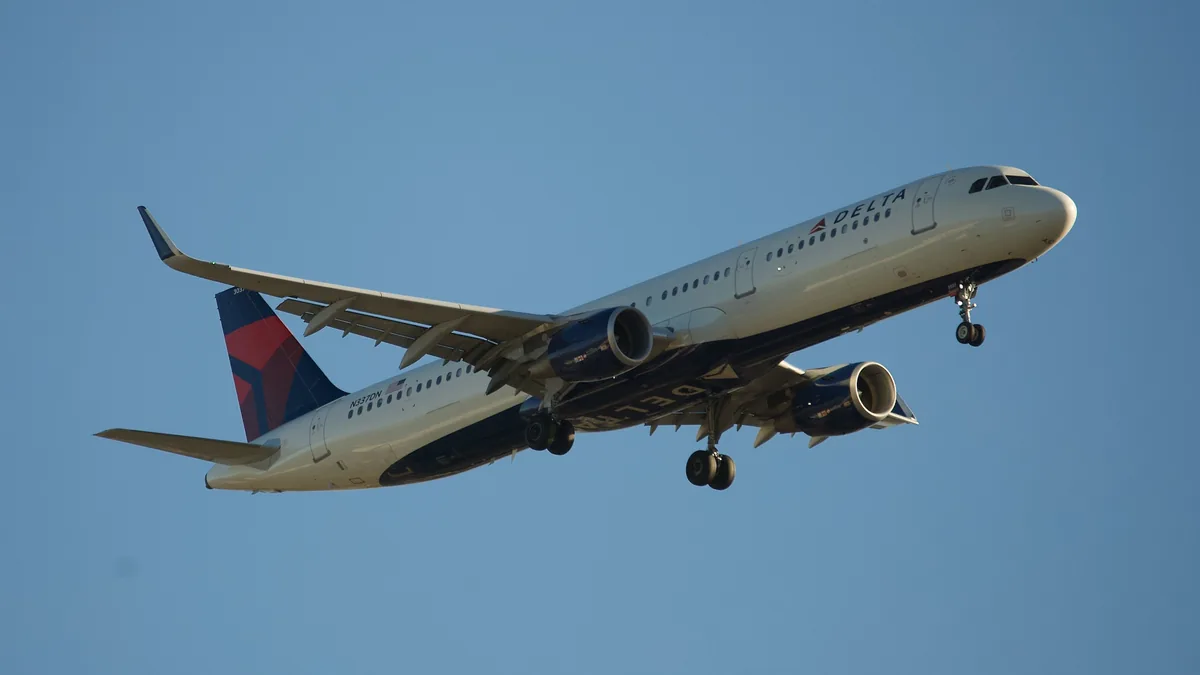 Explore the A321-200's range on the map →
The Airbus A321-200 can fly up to 3,600 nautical miles (6,667 km) as a ferry flight with no payload. With a full load of passengers and cargo, the range drops to approximately 3,200 nm (5,926 km). At its cruise speed of 450 kt, that's about 8h 0m of non-stop flying at ferry weight, or 7h 7m fully loaded.

The A321-200 is the longest-serving stretch of the original A320 family, adding 6.9 metres of fuselage for up to 220 seats while retaining the same wing and beefed-up undercarriage. Airlines that needed to up-gauge from A320s without adding a whole new type rating found it invaluable - it was the upgrade that required minimal disruption. American Airlines, for instance, leaned heavily on the A321-200 for its domestic "premium" segments, fitting first-class cabins alongside coach in a configuration that the shorter A320 couldn't match.
The A321-200's greatest claim to fame is its unexpected range performance. Operators of the ACT-equipped (Additional Centre Tank) version discovered they could fly missions of up to 3,200 nautical miles - enough for transatlantic hops from the eastern seaboard to the Azores, Reykjavik, and even Shannon. WOW Air, the Icelandic low-cost carrier, used standard A321-200s on budget North Atlantic routes that nobody expected a narrowbody to handle. The aircraft made those economics work because the narrowbody's lower acquisition cost and simpler maintenance offset the slightly worse per-seat fuel burn compared to widebodies on the same stage length.
The -200 is now being superseded by the A321neo and A321XLR, which offer dramatically better range and fuel efficiency. But the -200 proved the market concept that the XLR now exploits at scale: there are thousands of thin long-haul city pairs where a narrowbody can compete with widebodies on economics, provided the range is sufficient and the schedule is carefully managed around seasonal headwinds.