Airbus — Commercial
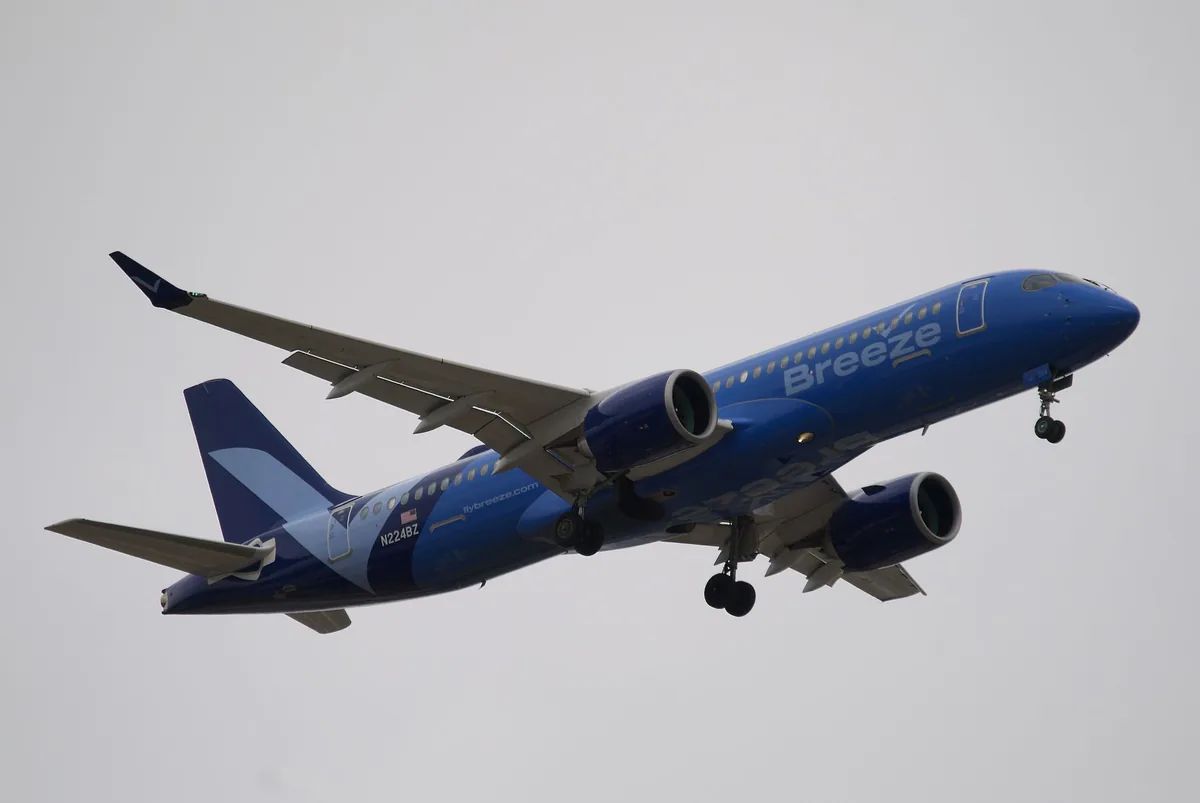
Pictured: Airbus A220-300
Explore the A220-100's range on the map →The Airbus A220-100 can fly up to 4,290 nautical miles (7,945 km) as a ferry flight with no payload. With a full load of passengers and cargo, the range drops to approximately 2,620 nm (4,852 km). At its cruise speed of 447 kt, that's about 9h 36m of non-stop flying at ferry weight, or 5h 52m fully loaded.
Source: Airbus Orders & Deliveries, as of Aug 2026

Range shown at max payload (full passenger load), with average wind conditions
The A220-100 is Airbus's answer to a market gap that Airbus itself once refused to address. Originally developed by Bombardier as the C Series CS100, it was a clean-sheet design built to dominate the 100–130 seat segment - slots too small for the A320 family to serve economically. When Airbus acquired a controlling stake in 2018, it rebranded the aircraft and folded it into its narrowbody product line, overnight giving itself a weapon against the 737-700 that it had never had before.
Delta Air Lines is the jet's biggest champion, operating over 50 aircraft configured in an unusually spacious three-class layout. Delta's bet on the A220 was about passenger experience as much as range. The cabin is noticeably wider than the A320's for a single-aisle aircraft, and every seat gets a proper window alignment, a detail regular travelers notice immediately. Swiss International Air Lines, the type's original European launch customer, flies it on thin routes from Zurich where the economics of a larger narrowbody simply don't work.
Under the hood, the A220-100 uses Pratt & Whitney PW1500G geared turbofan engines - the same family powering the A320neo - which deliver roughly 20% better fuel burn than the CFM56-powered rivals they replace. The geared turbofan's fan spins at a different speed from the low-pressure turbine, which sounds like a minor engineering detail until you realize it makes the engine dramatically quieter and more efficient at the same time. Airlines operating the A220-100 from noise-sensitive airports like London City (LCY) appreciate that side effect as much as the fuel bill.