Embraer — Commercial
 Explore the E175's range on the map →
The Embraer E175 can fly up to 2,200 nautical miles (4,074 km) as a ferry flight with no payload. With a full load of passengers and cargo, the range drops to approximately 1,750 nm (3,241 km). At its cruise speed of 447 kt, that's about 4h 55m of non-stop flying at ferry weight, or 3h 55m fully loaded.

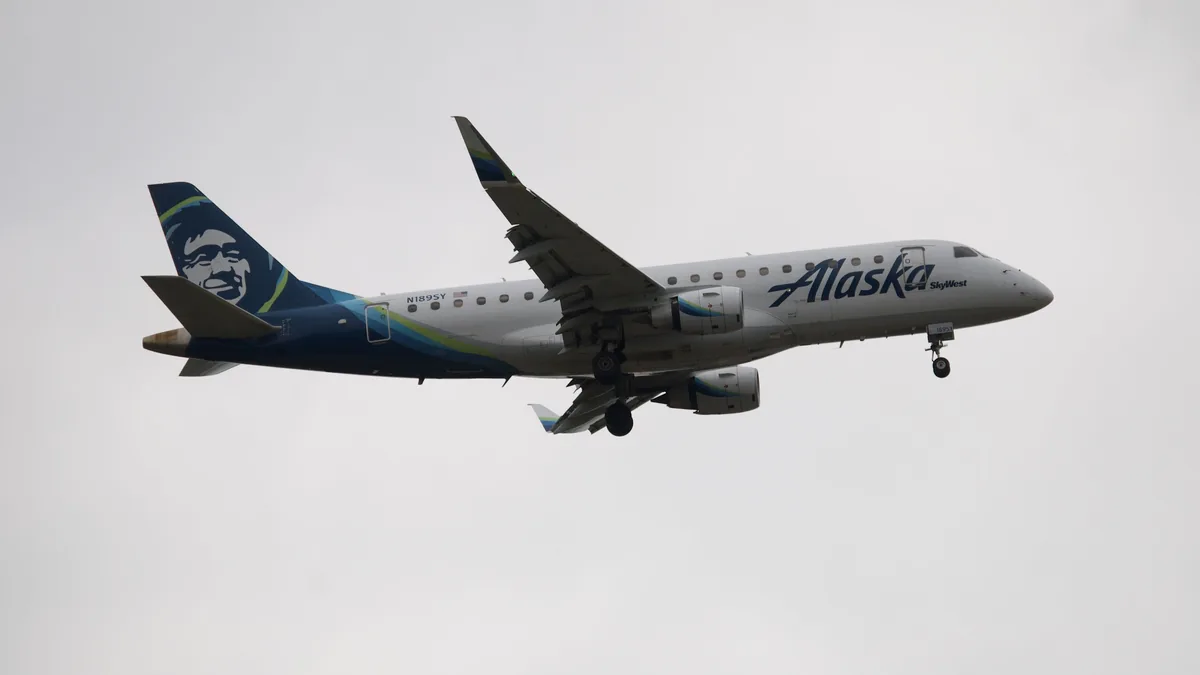
The E175 is the most important regional aircraft in North America, bar none. A 2-metre stretch over the E170, it seats 76–88 passengers - and US mainline pilot scope clauses specify exactly 76 seats for the regional jets that can operate under American, Delta, and United branding. SkyWest Airlines, Republic Airways, and Envoy (American Eagle) configure their E175s at precisely 76 seats to satisfy this requirement, while still operating an aircraft with a noticeably more spacious cabin than the CRJ-700 it displaced.
This scope clause dynamic creates a unique market: the E175 is simultaneously the most commercially desirable regional jet (for the cabin experience) and the most constrained (because the number of scope-clause seats at each mainline carrier caps fleet size). Airlines can't simply order unlimited E175s and expand - they need the mainline carrier to negotiate a scope clause amendment that allows more 76-seat jets. Those negotiations happen at contract renewal time and are fiercely contested by pilot unions who see regional jets as competition for mainline flying jobs.
The E175's range - 2,200 nm - is more than sufficient for any US domestic regional mission and most short-haul international routes from Canadian or Mexican hubs. Air Canada Express uses it extensively on trans-Canada routes. The aircraft's two Pratt & Whitney Canada PW1700G engines are efficient and quiet relative to the CRJ's General Electric CF34s, contributing to lower community noise at airports where frequency matters more than seat count.