Beechcraft — General Aviation
 Explore the Bonanza G36's range on the map →
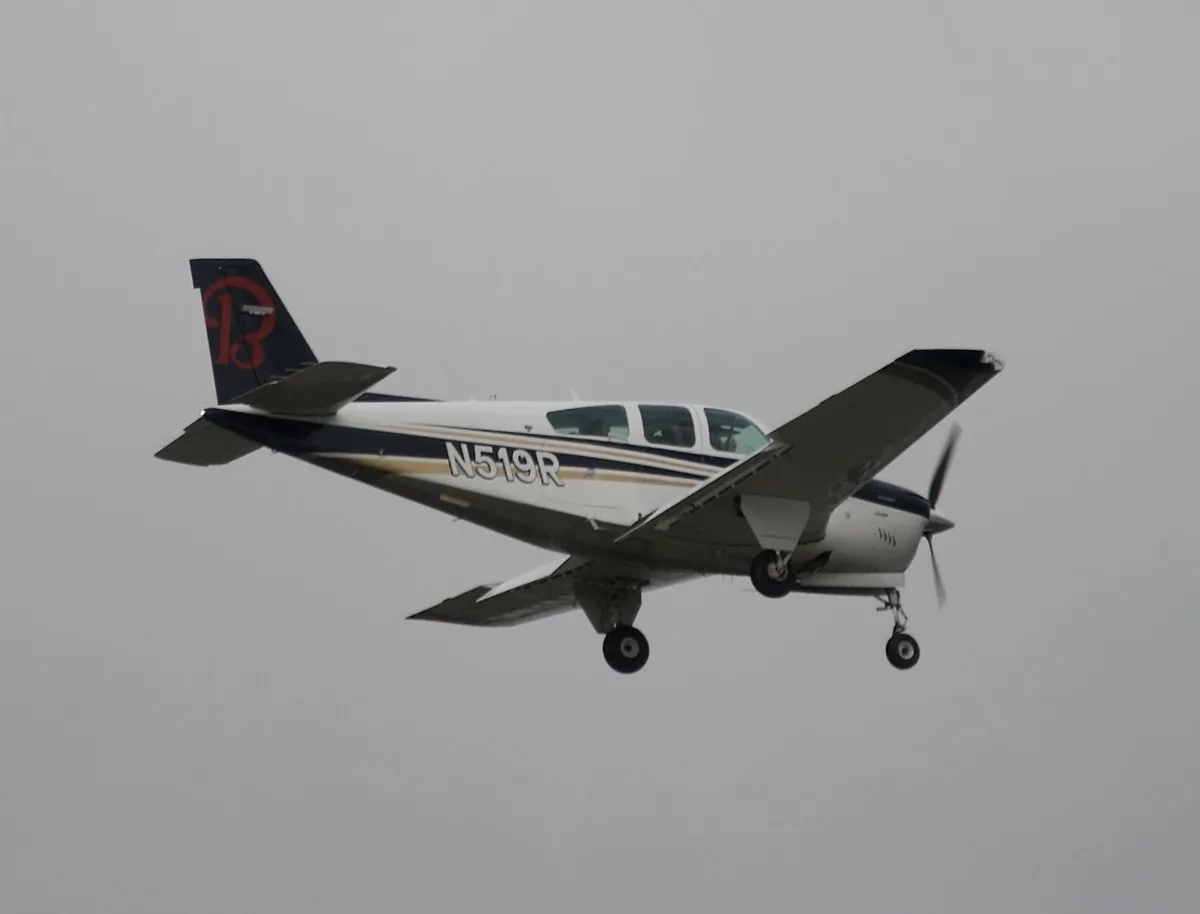
The Beechcraft Bonanza G36 can fly up to 920 nautical miles (1,704 km) as a ferry flight with no payload. With a full load of passengers and cargo, the range drops to approximately 740 nm (1,370 km). At its cruise speed of 174 kt, that's about 5h 17m of non-stop flying at ferry weight, or 4h 15m fully loaded.
The Beechcraft Bonanza holds a unique place in aviation history: it has been in continuous production since 1947, making it the longest-produced aircraft design in aviation history - longer than the 747, longer than the 737, longer than any military jet. The current G36 is recognizably the same aircraft that debuted in 1947, with progressive updates to avionics, engine management, and interior appointments that keep it commercially viable. This lineage means a Bonanza G36 owner flies an aircraft that shares its basic DNA with machines that crossed the US in the Truman administration.
The Bonanza's reputation among pilots is that of a high-performance aircraft with genuine cross-country capability. The Continental IO-550-B engine produces 300 hp and propels the six-seat G36 at up to 176 knots - notably faster than a 172 or PA-28, enabling the Bonanza to serve as a serious business transportation tool for owner-pilots whose trips span 400–700 miles. The G36's 920 nm range with careful fuel management covers most US regional business flying comfortably without the fuel stop complexity that shorter-range aircraft require.
Older Bonanzas - particularly the V-tail models with their distinctive butterfly empennage - are among the most actively maintained vintage aircraft in general aviation. The V-tail was discontinued in 1982 but created such loyal ownership communities that finding a well-maintained example from the 1960s or 1970s remains entirely possible. This longevity of the design, maintained airframe by airframe through a dedicated owner community, is as much a part of the Bonanza's legacy as any specification figure.