Boeing — Commercial
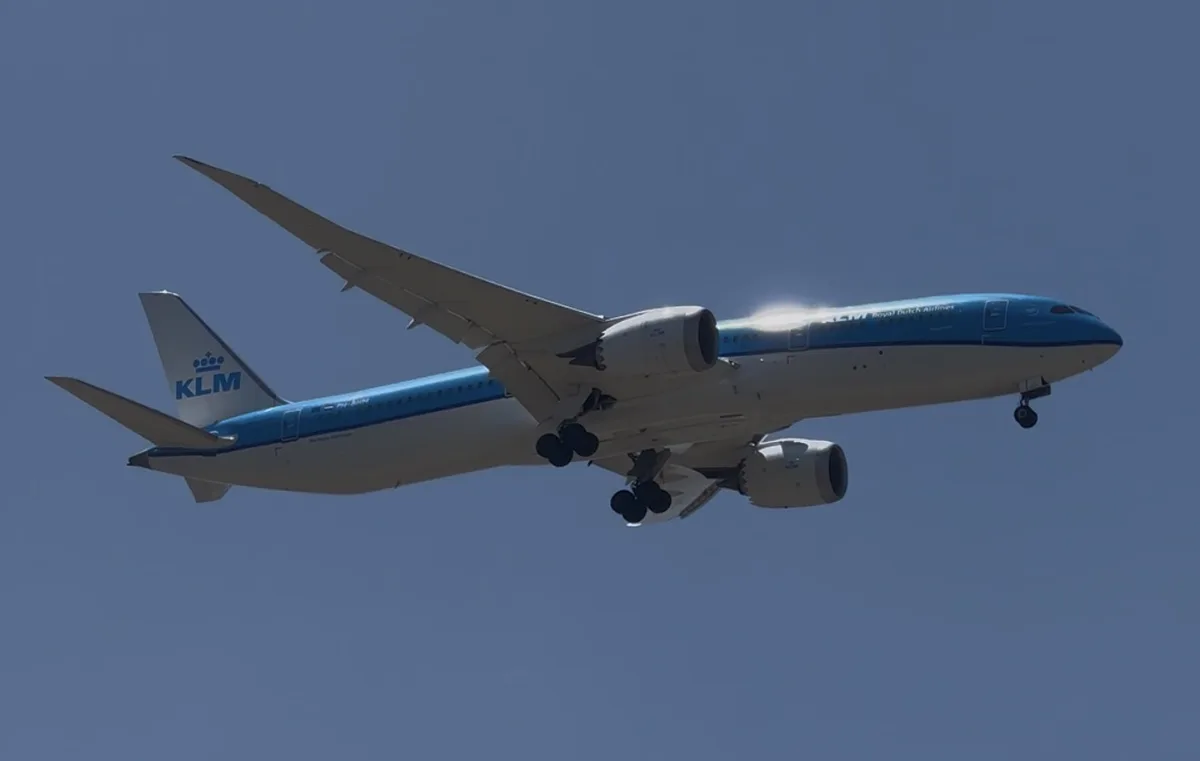 Explore the 787-9's range on the map →
The Boeing 787-9 can fly up to 10,100 nautical miles (18,705 km) as a ferry flight with no payload. With a full load of passengers and cargo, the range drops to approximately 8,100 nm (15,001 km). At its cruise speed of 488 kt, that's about 20h 42m of non-stop flying at ferry weight, or 16h 36m fully loaded.

The 787-9 is the Dreamliner that everything else was building toward. A 6-metre fuselage stretch over the 787-8 adds 30 seats and minimal weight penalty - the -9's heavier structure is almost entirely offset by the efficiency gains from a slightly longer moment arm and better aerodynamic loading. The result is an aircraft that outsells its smaller sibling and larger sibling combined, and has become the default choice for airlines opening new long-haul routes or replacing aging widebodies.
The range records associated with the 787-9 are extraordinary. Air New Zealand connected Auckland with Buenos Aires on the type, covering 9,765 km of mostly ocean on a route that operates seasonally but proves the aircraft's reach. Norwegian used 787-9s to operate $99 one-way transatlantic fares between London and the US East Coast - the aircraft's fuel efficiency making budget long-haul economics work in a way that previous widebodies couldn't. Qantas uses it on Perth–London, the only nonstop flight between Australia and Europe, at 14,498 km - the longest nonstop sector by distance that regularly operates with a full passenger load.
Under the skin, the GEnx-1B or Rolls-Royce Trent 1000 engines represent two competing approaches to the same efficiency target. The GEnx uses a carbon fiber composite fan case; the Trent 1000 uses a titanium fan. Both achieve roughly 20% better fuel burn than the engines they replace on comparable-size widebodies. The composite fuselage allows cabin windows 65% larger than aluminum equivalents - a detail passengers notice immediately and one that has influenced subsequent aircraft programs from the A350 onward.