Boeing — Commercial
 Explore the 737 MAX 8's range on the map →
The Boeing 737 MAX 8 can fly up to 4,100 nautical miles (7,593 km) as a ferry flight with no payload. With a full load of passengers and cargo, the range drops to approximately 3,550 nm (6,575 km). At its cruise speed of 453 kt, that's about 9h 3m of non-stop flying at ferry weight, or 7h 50m fully loaded.

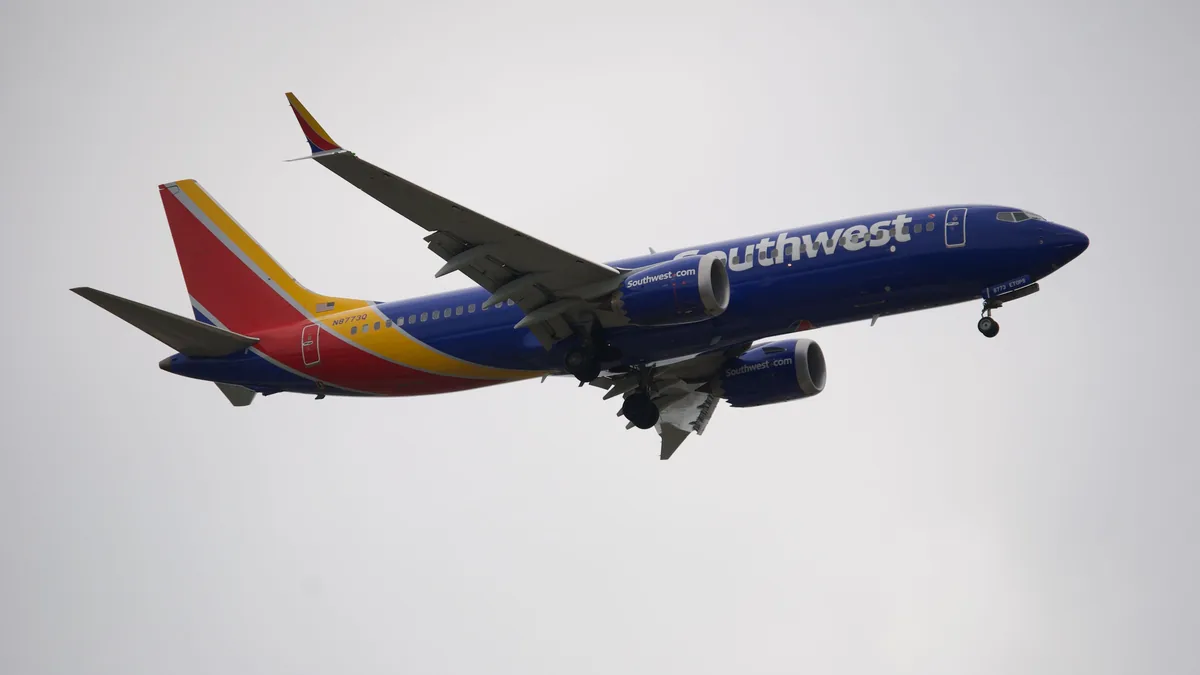
The 737 MAX 8 is the aircraft that defined the most consequential aviation crisis of the 21st century. Two crashes - Lion Air 610 in October 2018 and Ethiopian Airlines 302 in March 2019, 346 deaths total - grounded the entire MAX family for 20 months and triggered the most comprehensive review of Boeing's certification practices in decades. The cause was MCAS: a flight control system designed to prevent aerodynamic stall in the MAX's new engine configuration, which in both crash cases incorrectly activated and pushed the nose down uncontrollably.
Before and after the grounding, the MAX 8 is commercially formidable. LEAP-1B engines deliver 14% lower fuel burn than the 737-800 CFM56s it replaces, and at 178–210 seats it fits the same gate footprint as its predecessor while carrying more passengers. Ryanair ordered 210, Southwest ordered hundreds, American Airlines and WestJet standardized on it. Icelandair uses it on transatlantic routes that the standard -800 could barely manage, taking advantage of the MAX's ETOPS-180 rating and improved fuel efficiency to serve Reykjavik–New York with economics that narrowbody skeptics said were impossible.
The post-grounding MAX 8 returned to service in November 2020 with comprehensive MCAS software redesign, crew training requirements, and new angle-of-attack sensor redundancy. Airlines that had stuck with Boeing through the crisis - Ryanair's Michael O'Leary among them - found themselves with an aircraft that actually delivers its promised efficiency. Operators who had hedged toward Airbus found themselves short of capacity at exactly the moment demand recovered from COVID.