Boeing — Commercial
 Explore the 737-800's range on the map →
The Boeing 737-800 can fly up to 4,000 nautical miles (7,408 km) as a ferry flight with no payload. With a full load of passengers and cargo, the range drops to approximately 2,935 nm (5,436 km). At its cruise speed of 447 kt, that's about 8h 57m of non-stop flying at ferry weight, or 6h 34m fully loaded.

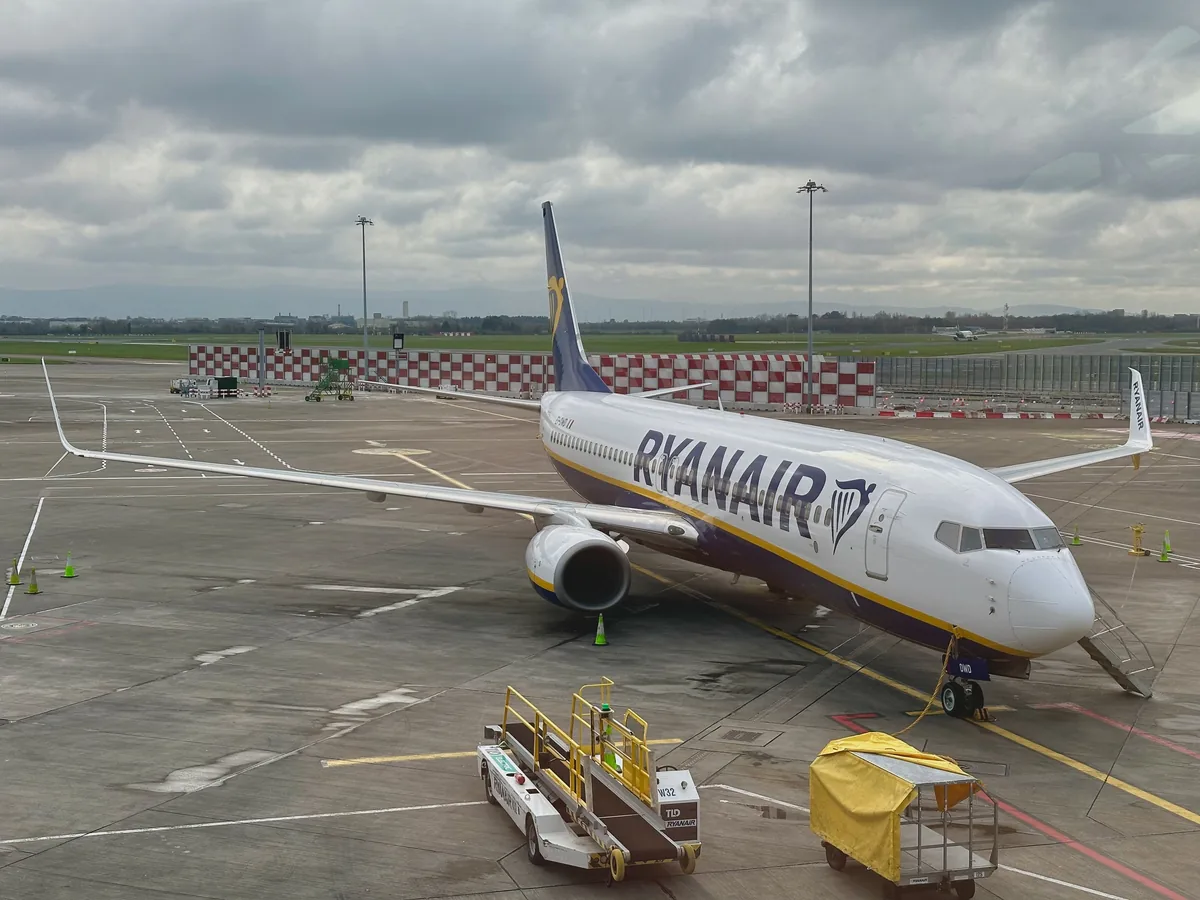
The 737-800 is the best-selling Boeing aircraft of all time. Over 4,800 were delivered before the MAX family began displacing it on new orders, and the type became the defining narrowbody of the low-cost carrier era. Ryanair alone operates over 400, configured at the maximum certified 189-seat density - every row packed, every overhead bin sold as paid baggage, every kilogram of weight managed with obsessive discipline. The aircraft is so central to Ryanair's operation that the airline contributed to Boeing's design decisions on subsequent variants.
The -800 slots between the shorter -700 and the stretched -900ER, and this middle position turned out to be exactly where airline demand concentrated. At 162 seats in a normal configuration, it carries enough passengers to make medium-density European and US domestic routes profitable, while its range of roughly 2,935 nautical miles covers almost every sector those airlines want to fly. Alaska Airlines flew it extensively across the US West Coast; American, Delta, and United all operate substantial fleets. Norwegian used it on transatlantic leisure routes, leveraging its low acquisition cost to offer sub-€100 one-way fares between Scandinavia and the eastern US.
The aircraft's Achilles heel - identified and eventually exploited by Airbus - is its ground clearance. The 737 was originally designed in the 1960s for airports with minimal ground support equipment, meaning its engines hang very low to the ground. This constrained how large Boeing could make the CFM56 engines on the NG series, and it's fundamentally why the 737 MAX required MCAS (Maneuvering Characteristics Augmentation System) when given larger LEAP engines. The -800 itself never had this issue, but its legacy engine position shaped the MAX's troubled history.