Boeing — Commercial
 Explore the 737-700's range on the map →
The Boeing 737-700 can fly up to 4,000 nautical miles (7,408 km) as a ferry flight with no payload. With a full load of passengers and cargo, the range drops to approximately 3,365 nm (6,232 km). At its cruise speed of 447 kt, that's about 8h 57m of non-stop flying at ferry weight, or 7h 32m fully loaded.

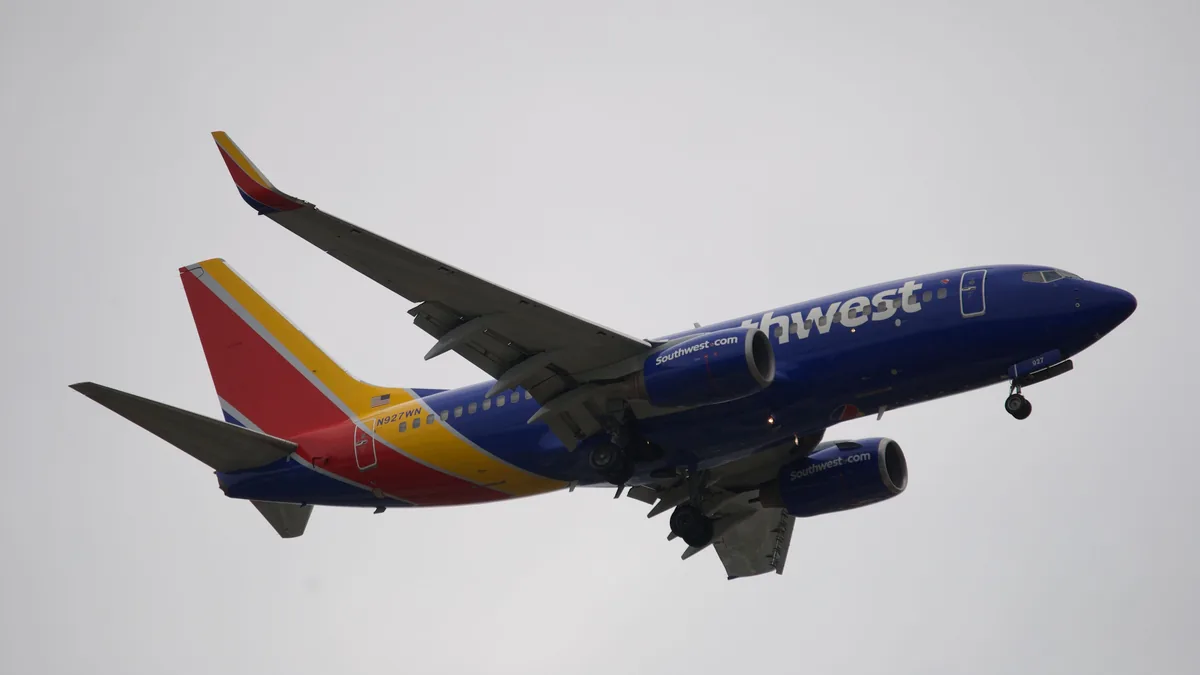
The 737-700 is the smallest Boeing Next Generation narrowbody - the replacement for the 737-300 Classic - and it found its most natural home at Southwest Airlines, which standardized its entire 800-aircraft fleet on the 737 family. Southwest's fleet homogeneity is legendary in the industry: a single type means a single pilot certificate, a single maintenance program, and interchangeable spare parts across hundreds of airports. The 737-700's 128-seat capacity (in Southwest's high-density layout) suited the carrier's short-haul focus perfectly.
Outside Southwest, the 737-700 appealed to carriers serving thinner routes where the 737-800's 162-seat capacity would fly with too many empty rows. Canadian low-cost carriers and smaller European operators embraced it for this reason. WestJet built its early network around a 737-700/800 mix before eventually transitioning to an all-MAX fleet.
The 737-700 is gradually disappearing from passenger service as airlines upgrade to the MAX 7, which offers the same 130-seat configuration with 14% better fuel efficiency. Southwest has ordered 280 MAX 7s specifically to replace its aging 737-700 fleet - a type swap that maintains the single-fleet philosophy while dramatically cutting the fuel bill. The -700's legacy is less about individual performance than about proving that a simple, focused fleet strategy can beat a more varied approach to aircraft selection.