Airbus — Commercial
 Explore the A320-200's range on the map →
The Airbus A320-200 can fly up to 4,350 nautical miles (8,056 km) as a ferry flight with no payload. With a full load of passengers and cargo, the range drops to approximately 3,300 nm (6,112 km). At its cruise speed of 450 kt, that's about 9h 40m of non-stop flying at ferry weight, or 7h 20m fully loaded.

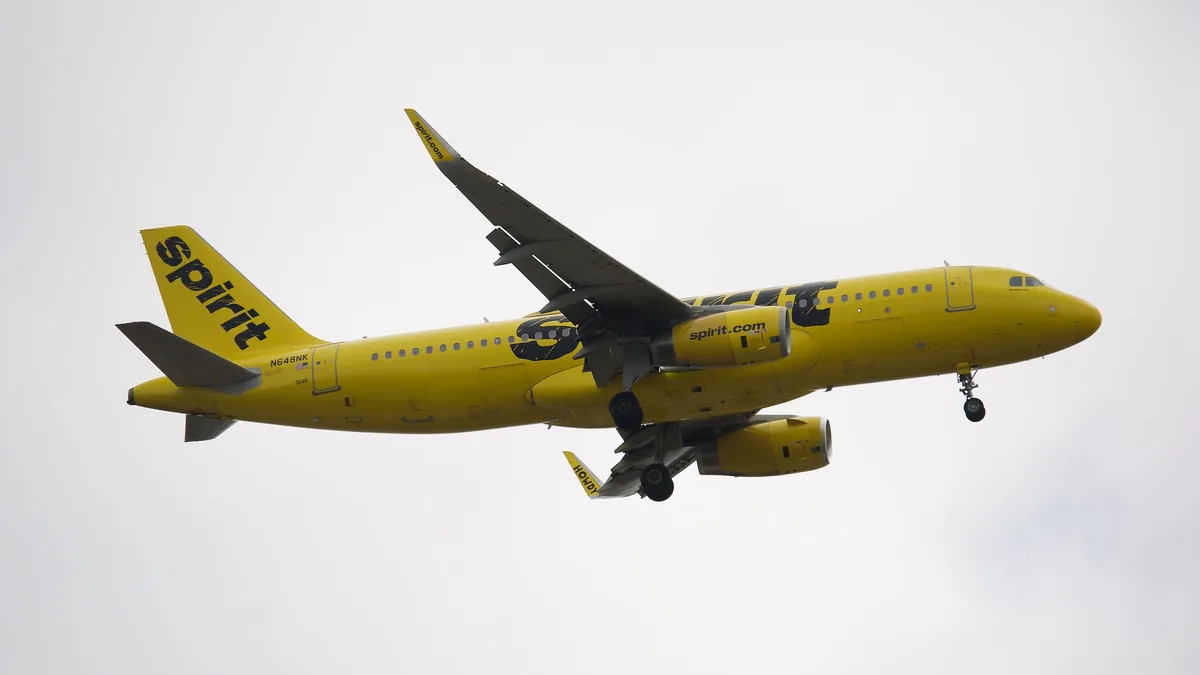
The A320-200 is the aircraft that industrialized short-haul flying. With over 9,000 examples delivered across both the -200 and neo variants, it is the most commercially successful narrowbody ever built, edging the 737 family in total orders. It entered service in 1988 and immediately forced Boeing to accelerate the 737-400, -500, and eventually the entire 737 Next Generation series - such was the threat it represented.
What made the original A320 revolutionary was fly-by-wire flight controls combined with a sidestick controller instead of a conventional yoke. In 1988 this was genuinely radical, and it allowed Airbus to build a common type rating across the entire A318/A319/A320/A321 family - four different fuselage sizes, one pilot certificate. Airlines love this because transitioning a 737 pilot to an A320 costs roughly the same as moving from an A319 to an A321. The economic ripple effects of that decision are still being felt.
Ryanair (737-only) and IndiGo (A320-only) represent the two poles of narrowbody strategy, and IndiGo's A320 fleet of 300+ aircraft is the largest concentration of Airbus narrowbodies at a single airline. On PlaneRange, the A320-200's 3,300 nm ferry range maps to a comfortable range ring that covers all of Europe from most hub cities, plus most of the eastern US or western Europe from transatlantic departure points - a useful visual for understanding why it dominates the continental short-haul market.